
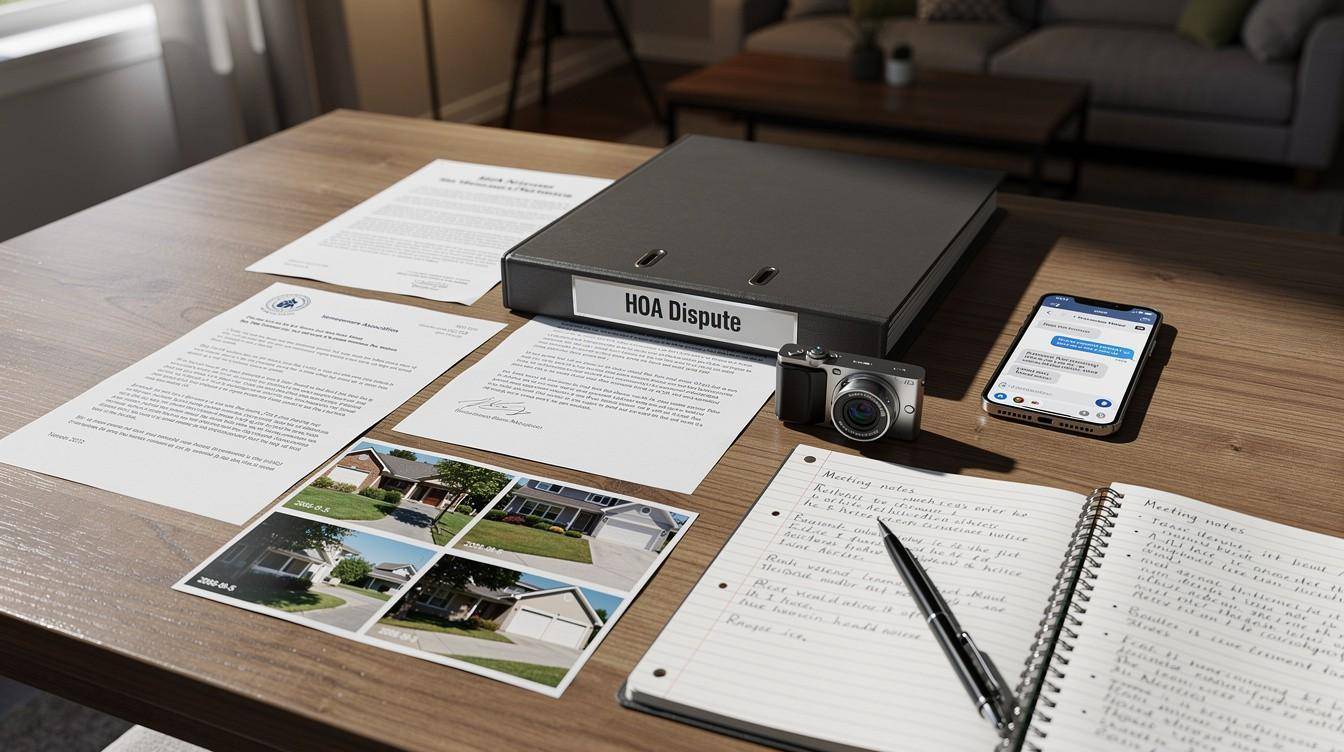
HOA disputes can escalate quickly when communication breaks down. Without solid dispute documentation, you’re left with he-said-she-said arguments that rarely hold up in court.
At Pratt & Associates, we’ve seen countless homeowners lose cases simply because they didn’t keep proper records. The difference between winning and losing often comes down to whether you documented everything along the way.
What Makes Documentation Your Strongest Defense
Courts Favor Documented Evidence Over Memory
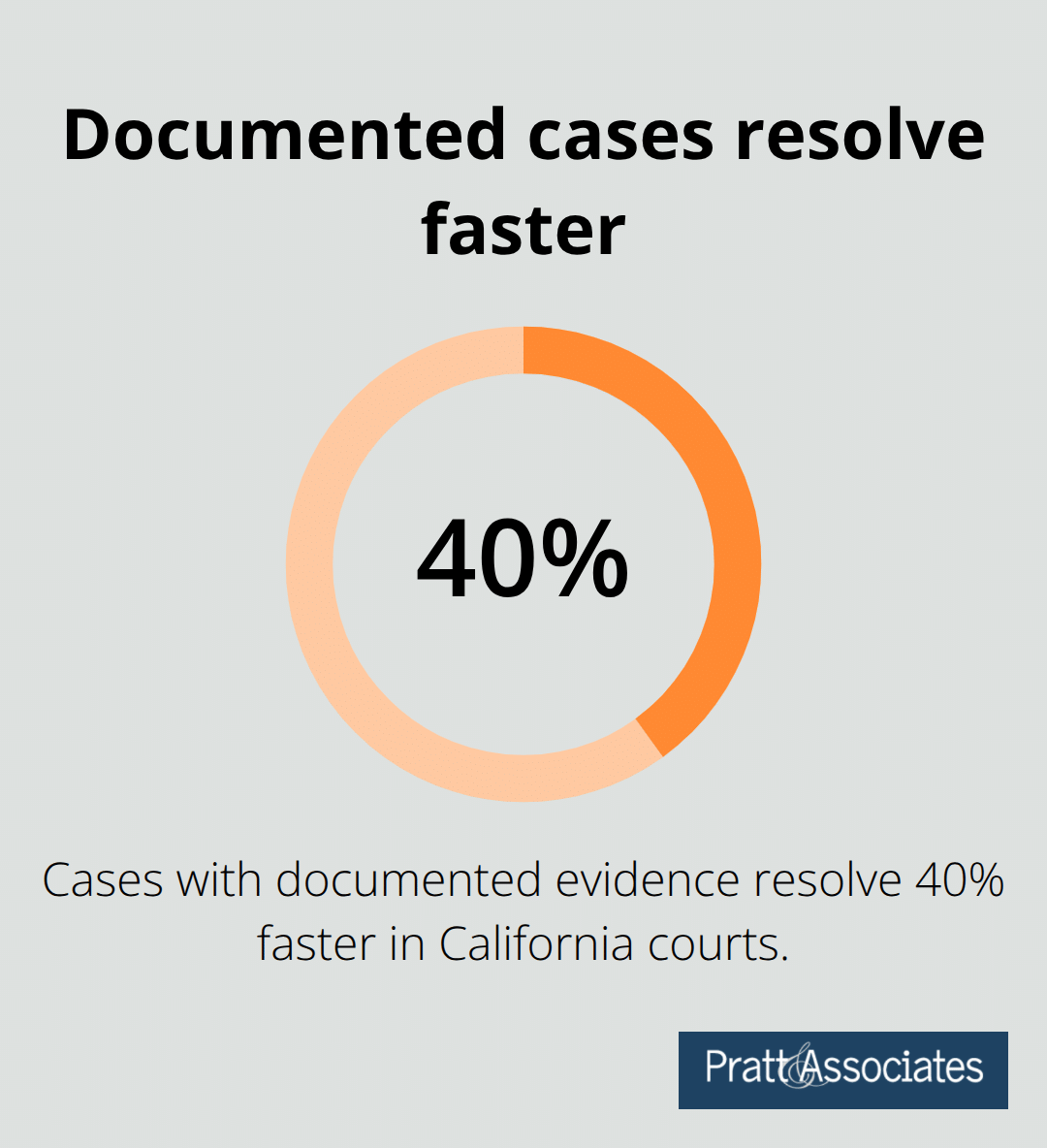
Documentation transforms vague complaints into concrete evidence that courts and arbitrators take seriously. When you have a written record of every communication, photo, and incident, you’re no longer asking a judge to believe your memory-you’re presenting facts. California courts have consistently ruled that homeowners with comprehensive documentation win significantly more disputes than those relying on verbal accounts. The California Courts Judicial Council reports that cases with documented evidence advance faster through litigation, often resolving in 40% less time than cases without proper records.
Building a Timeline That Proves Your Case
A timeline of events gives your case structure and credibility. When you record dates, times, and specific violations in writing, you establish a pattern that’s difficult to dispute. Photographs and videos of property damage or covenant violations serve as visual proof that no amount of argument can refute. If your HOA claims you never complained about a maintenance issue, but you have email records from three separate dates showing your requests, the documentation wins every time.
Why Organization Matters More Than You Think
The most important step is maintaining these records in an organized system from day one, not scrambling to reconstruct events months later when your memory has faded. Courts recognize that contemporaneous notes (those written at the time events occur) carry far more weight than recollections made after disputes escalate. Many homeowners lose cases not because facts weren’t on their side, but because they couldn’t prove those facts existed when they needed to. This is where the real battle gets won or lost-not in arguments, but in the evidence you can actually produce.
What Happens When You Move Forward Without Documentation
Without solid records, you’re left with he-said-she-said arguments that rarely hold up in court. The burden falls on you to reconstruct what happened, when it happened, and why it matters. Judges and arbitrators have heard countless conflicting stories, and they naturally gravitate toward the side with tangible proof. Your next step involves learning exactly how to document these disputes so that when you need your evidence, it’s there and it’s undeniable.
How to Document HOA Disputes the Right Way
Email Creates the Paper Trail Courts Demand
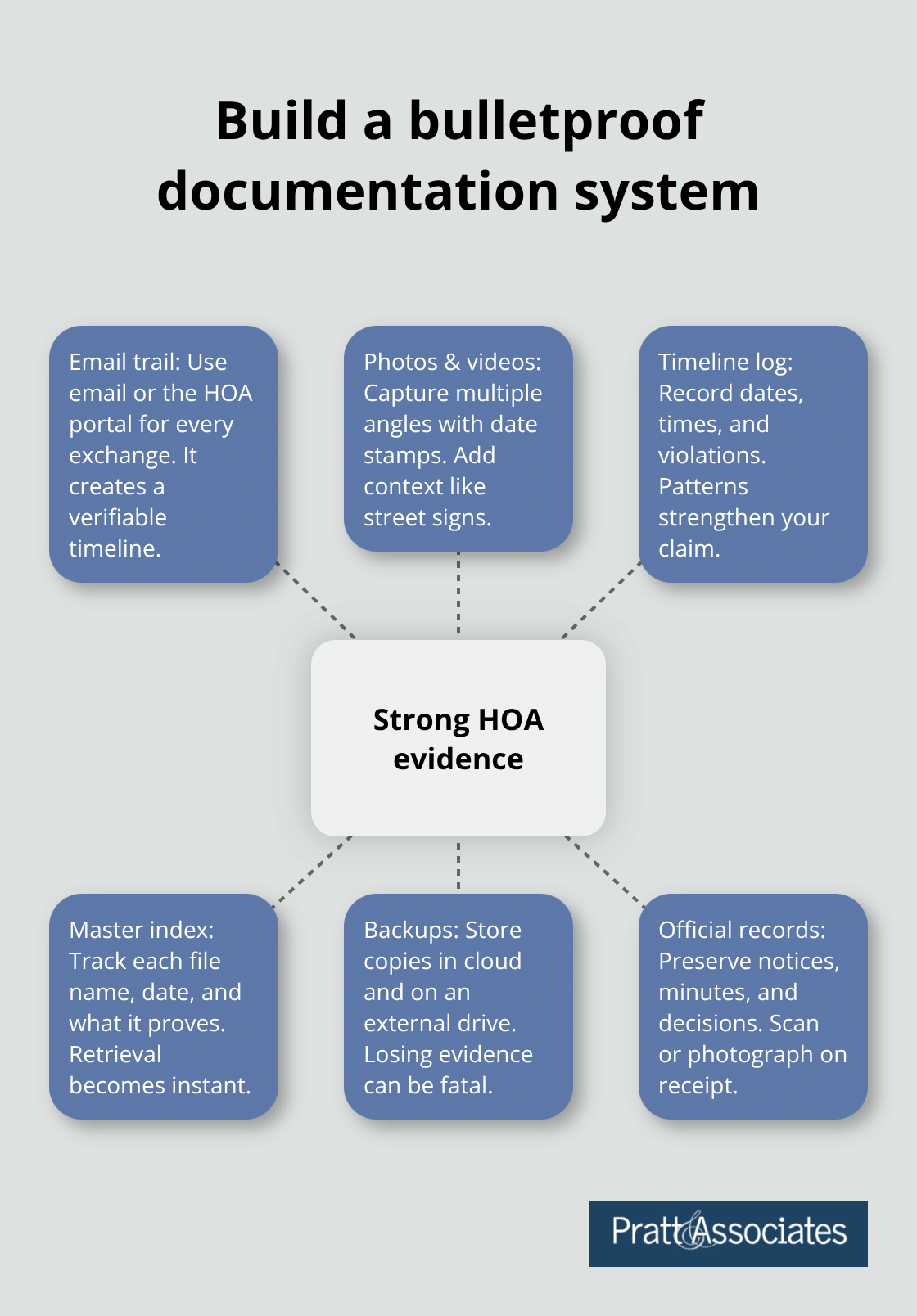
Email stands as your most powerful documentation tool in HOA disputes. Every conversation about violations, complaints, or repair requests should happen in writing through email, certified mail, or your HOA’s official portal. Verbal complaints vanish the moment the conversation ends, but written records create a permanent trail that proves exactly what you said, when you said it, and how the HOA responded.
Send follow-up emails after phone calls to confirm what was discussed. Write something like: “I wanted to confirm our phone conversation on October 15 regarding the fence violation at 42 Oak Street. You mentioned the violation would be addressed by November 1.” This simple practice transforms an easily disputed phone call into documented evidence. Screenshots of text messages, portal communications, or social media messages from HOA officials also carry weight in court, but email remains the gold standard because it includes timestamps and clear sender information that courts cannot challenge.

Photographs and Videos Provide Visual Proof
Photographs and videos matter far more than most homeowners realize. When you photograph a property violation, take multiple shots from different angles and include the date stamp on your camera or phone. Include something in the photo that provides context, like a street sign or house number, so no question exists about what you’re documenting.
If your HOA claims a maintenance issue doesn’t exist, but you have dated photos showing the exact problem, the HOA’s denial becomes irrelevant. Keep these images organized in a dedicated folder on your computer with consistent naming like “2026-10-15-Fence-Damage-Front-Yard.” For violations that change over time, take photos on the same date each month to show patterns. Store copies in at least two places (cloud storage and an external hard drive work well) because losing documentation proves almost as damaging as never having it.
Create an Index of All Evidence
Maintain a separate master document that lists every piece of evidence you’ve collected, including dates, file names, and what each document proves. This index becomes invaluable when you need to locate specific evidence quickly during legal proceedings. The index should reference your photographs, emails, videos, and any official HOA documents you’ve received. When disputes move toward litigation, you’ll have everything organized and ready to present to your attorney or the court.
This systematic approach to documentation transforms scattered information into a cohesive case that demonstrates patterns of violations or misconduct. With your evidence organized and your communications recorded, you’re ready to understand the common mistakes that undermine even well-intentioned homeowners’ cases.
Documentation Mistakes That Sink HOA Cases
Verbal Conversations Leave No Evidence
Most homeowners make their biggest documentation errors before disputes even reach serious levels. The most damaging mistake happens when you conduct important conversations verbally with HOA board members or managers. A phone call about a violation, a hallway conversation about a complaint, or a casual discussion at a community meeting leaves zero paper trail. When disputes escalate weeks or months later, the HOA denies the conversation ever happened, and you have nothing to prove otherwise. Courts won’t accept your word against theirs without written evidence.
Never have important conversations verbally. Every single communication about violations, complaints, or requests must happen through email, certified mail, or your HOA’s official portal. If someone calls you, hang up and send a follow-up email confirming what was discussed. Write something like: “I wanted to confirm our phone conversation on October 15 regarding the fence violation. You mentioned the violation would be addressed by November 1.” This transforms a disputed phone call into documented fact.
Losing Official HOA Documents Destroys Your Case
Another critical mistake involves failing to preserve official HOA documents you receive. Many homeowners toss meeting minutes, violation notices, architectural review decisions, or financial statements after reading them, then scramble to locate copies months later when they need evidence. Some HOAs make finding replacement copies unnecessarily difficult, claiming records are lost or unavailable.
Store every official document your HOA provides in a dedicated folder, both digitally and in paper form. Photograph or scan violation notices immediately upon receipt with clear date stamps visible. Create a master index that lists every document you’ve collected, including dates and what each one proves. This organized system prevents the panic that strikes when you need evidence and can’t locate it.
Mixing Opinion With Facts Contaminates Your Evidence
The third major error combines personal observations with factual evidence in the same document. Writing something like “I think the board is corrupt and they always target me unfairly” in the same file as objective facts about violations weakens your entire case. Courts separate opinion from evidence, and mixing them makes judges question your credibility.
Keep personal frustrations completely separate from factual documentation. Your evidence file should contain only what happened, when it happened, and what you can prove-never your interpretations or feelings about it. HOA board members will exploit any hint that your documentation reflects bias rather than fact, and that contamination can destroy an otherwise solid case. Screenshots of text messages, portal communications, and emails all carry weight in court, but only when they remain pure factual records without editorial commentary.
Final Thoughts
Proper dispute documentation transforms HOA conflicts from he-said-she-said arguments into cases built on facts. The homeowners who win their disputes aren’t necessarily those with the strongest positions-they’re the ones who documented everything along the way. Email records, photographs with timestamps, and organized filing systems create evidence that courts and arbitrators cannot ignore or dispute.
Your documentation strategy should start before disputes escalate. Record every communication in writing through email or certified mail, photograph violations from multiple angles with clear date stamps, and maintain an organized index of all evidence so you can locate specific documents instantly when you need them. Avoid the mistakes that sink cases: never rely on verbal conversations, always preserve official HOA documents, and keep personal opinions completely separate from factual evidence.
If your HOA dispute has already escalated or you’re uncertain whether your dispute documentation is sufficient, Pratt & Associates in Los Gatos, California handles property litigation and can review your evidence to determine your next steps. Having your documentation organized and ready before consulting an attorney makes the process faster and more efficient.