
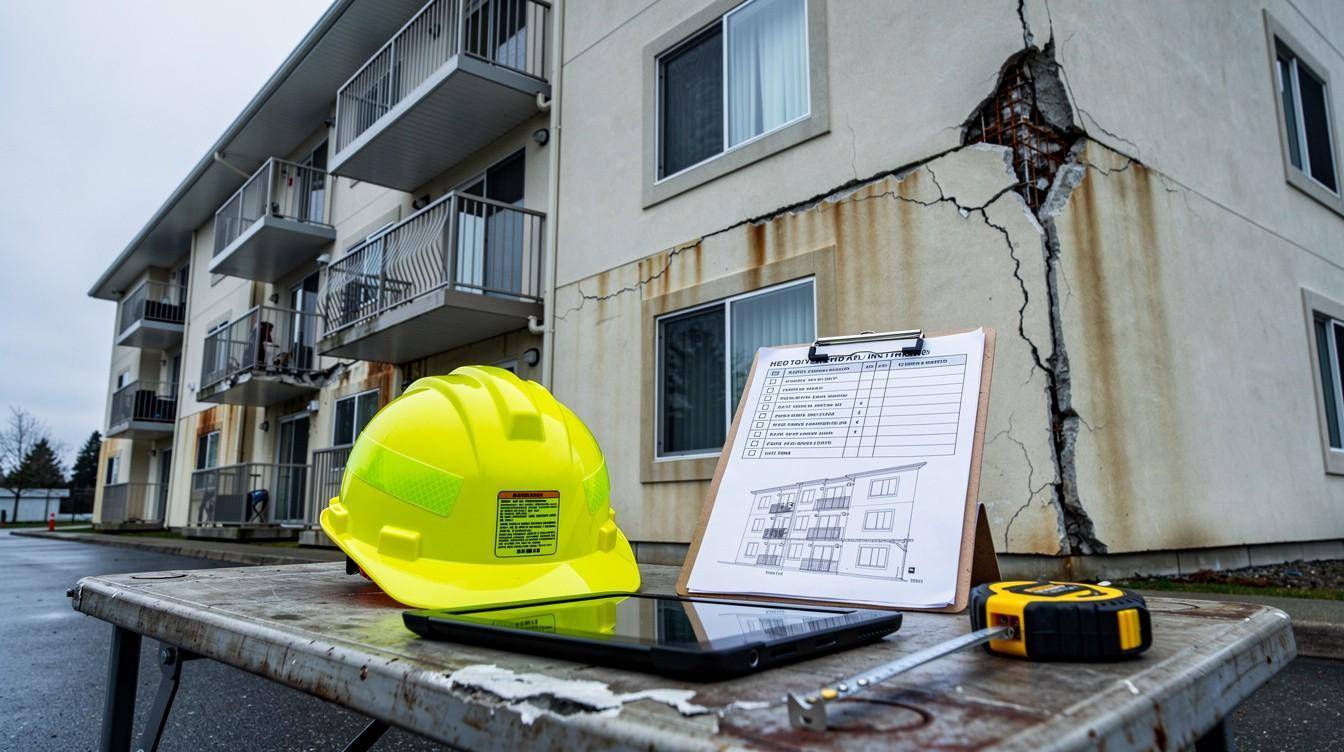
Construction defects can drain your HOA’s reserves and create conflict among residents. The question of construction defect liability often comes down to who signed the contracts and when the problems appeared.
At Pratt & Associates, we help HOA boards understand their financial obligations and recovery options. Knowing where responsibility lies is the first step toward protecting your community’s assets.
Who Actually Pays for Construction Defects
Developer Liability and Warranty Periods
Developers typically bear the initial financial responsibility for construction defects through warranty obligations that extend beyond the closing date. Most states impose implied warranties on builders for a period ranging from one to ten years, depending on the jurisdiction and the type of defect. In California, for example, builders face liability for structural defects for up to ten years from completion, while non-structural issues carry shorter timelines. However, developers often disappear or declare bankruptcy after projects finish, leaving HOAs with limited recovery options. This reality means your HOA board cannot simply assume the developer will pay when problems surface years later.
What Your Documents Actually Say
The practical approach involves understanding what your purchase and construction documents actually say, since many developer warranties contain significant loopholes and exclusions that shift costs to homeowners. Your specific contracts determine which defects fall under warranty coverage and which ones your HOA must address independently. Loopholes often exclude cosmetic damage, normal wear and tear, or defects caused by homeowner maintenance failures-categories that developers define broadly to minimize their obligations.

Reading these documents carefully (or having an attorney review them) prevents costly surprises later.
Builder’s Risk Insurance as a Funding Source
Builder’s risk insurance provides another potential funding source, but only if your HOA files claims during the active construction period or shortly after completion. Most builder’s risk policies expire within one to three years of project completion, making them unavailable for defects discovered later. Your HOA’s reserve funds and assessments often become the default payment mechanism when developer liability has expired or proven uncollectable. This places enormous pressure on homeowner assessments, sometimes requiring special levies of thousands of dollars per unit.
State Laws and Escrow Requirements
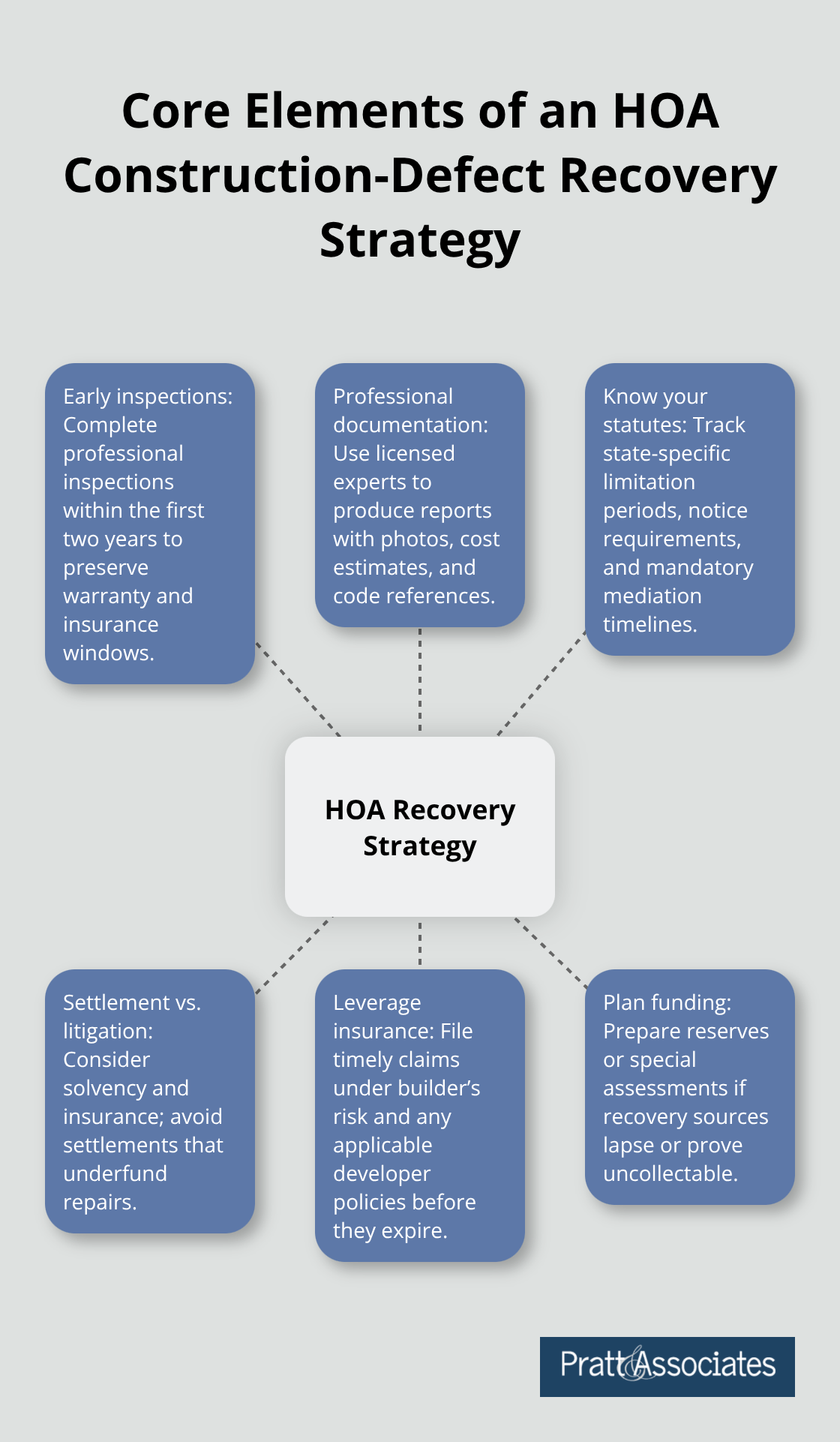
Your state’s construction defect laws may also require developers to fund escrow accounts or provide extended warranties, so reviewing your specific state’s regulations becomes essential before pursuing any recovery strategy. Some states mandate that developers maintain reserves specifically for construction defect claims, while others allow developers to limit their liability through specific contractual language. Understanding these requirements early shapes your HOA’s entire recovery approach. The timing of your inspection matters significantly-boards that obtain a thorough construction defect inspection within the first two years of community completion preserve access to warranty periods and active insurance coverage that later inspections cannot reach.
What Construction Defects Actually Cost HOAs
Foundation and Water Damage: The Most Expensive Problems
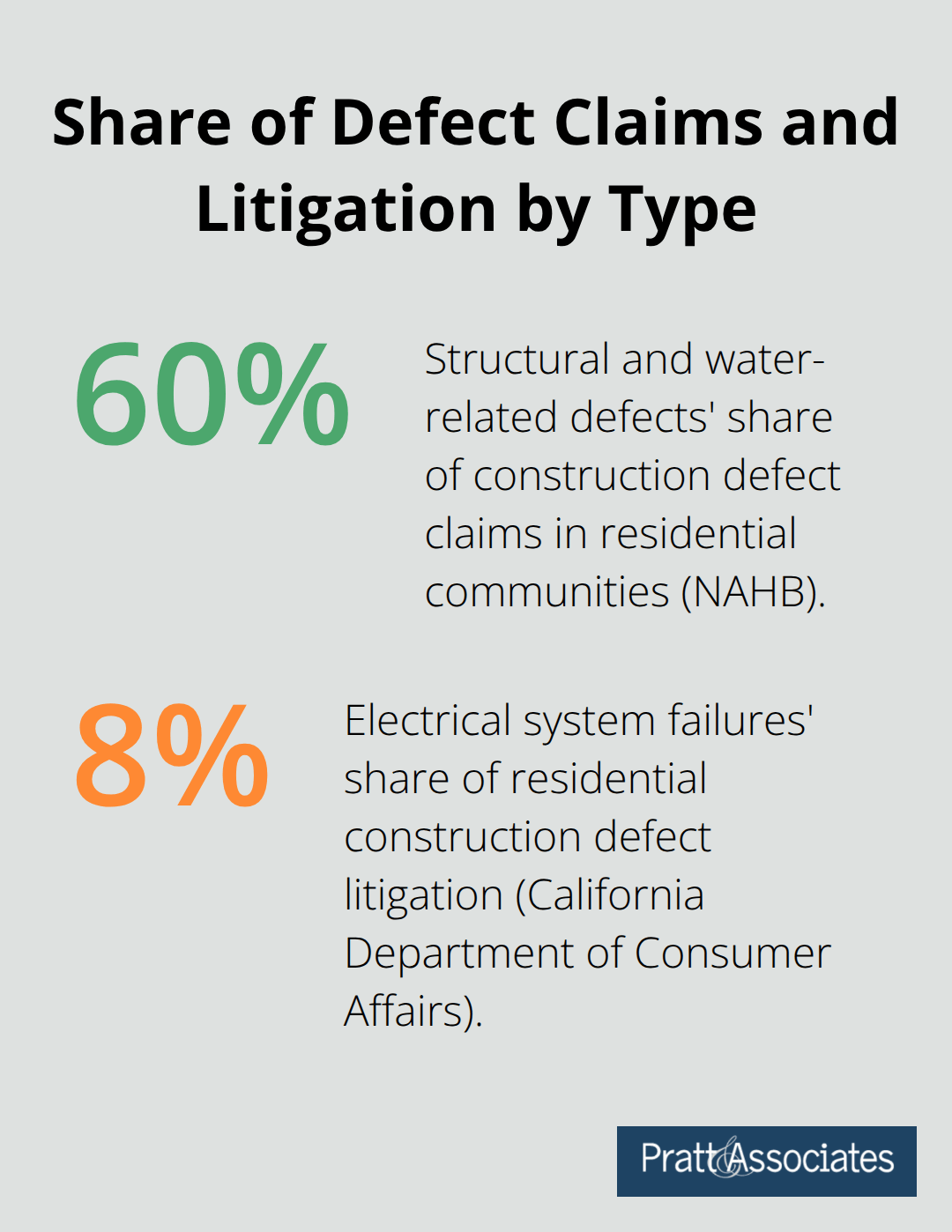
Foundation problems and water intrusion represent the two most expensive categories of construction defects in HOAs, and they’re also the hardest to catch early. The National Association of Home Builders reports that structural and water-related defects account for approximately 60% of all construction defect claims in residential communities. Foundation settlement, cracking, or shifting costs $50,000 to $200,000+ per building to repair properly, depending on the extent of damage and soil conditions.
Water intrusion through roofs, windows, or exterior walls causes even more widespread damage because it spreads silently for months before visible mold or rot appears.
Why Early Detection Matters for Water Damage
Boards that discover roof leaks in year two face vastly different financial outcomes than those that find them in year five. A leak caught early might cost $15,000 to repair, while the same leak discovered years later can balloon into a $500,000+ project after water damage affects multiple units simultaneously. The timing difference often determines whether the developer’s insurance still covers the repair or whether your reserves must absorb the entire cost. This reality makes professional inspections within the first two years of community completion essential for protecting your HOA’s finances.
Plumbing System Failures and Hidden Costs
Plumbing and electrical defects follow a different pattern-they’re often less visible but equally expensive when they fail. Common plumbing issues include undersized water lines, improper slope in drain lines, or defective materials like polybutylene pipes (used in many developments built between 1978 and 1995). These systems don’t announce themselves quietly; a failed water line or corroded pipe typically requires emergency repair and disrupts service to multiple units. Your HOA’s age matters significantly here-communities built in the 1990s and early 2000s face higher rates of plumbing failure due to the polybutylene pipe issue.
Electrical System Problems in Aging Communities
Electrical problems range from undersized service panels that cannot handle modern power demands to improperly grounded circuits that create fire hazards. The State of California’s Department of Consumer Affairs found that electrical system failures account for approximately 8% of all residential construction defect litigation. Newer construction more commonly experiences electrical capacity problems as residents add air conditioning units and home offices that original designs never anticipated. These failures demand immediate attention because they affect safety and habitability across your entire community.
Understanding these specific defect categories and their costs shapes how your HOA board approaches inspections and recovery strategies. The next section examines how to document these problems professionally and position your community for successful claims.
Getting Your Defects Documented and Positioned for Recovery
Hire Professional Inspectors Within the Critical Window
Professional inspections within the first two years of community completion are non-negotiable if your HOA wants to preserve access to developer warranties and active insurance coverage. Boards that wait until year three or four discover that builder’s risk policies have expired and developer liability periods have closed, eliminating recovery options that were available earlier. Hire a licensed structural engineer or construction defect inspector to conduct a comprehensive assessment, not a general home inspector. These professionals cost between $3,000 and $8,000 for a multi-building community, but they produce documentation detailed enough to support insurance claims and litigation if necessary.
Create Documentation That Supports Your Claims
The inspector’s report must identify specific defects, photograph evidence, estimate repair costs using current market rates, and connect each defect to construction standards or code violations. This documentation becomes your foundation for every action that follows, whether you pursue developer claims, insurance coverage, or assessment funding. Without professional documentation, you’re asking insurers or judges to accept anecdotal complaints rather than concrete evidence of defective work. Strong documentation transforms your position from one of complaint to one of proof.
Understand Your State’s Construction Defect Statutes
Your state’s construction defect statutes determine your timeline and available remedies before you take any other action. California’s ten-year structural defect statute differs dramatically from states that impose four or six-year limits, and some states require homeowners to file claims within specific windows or lose rights entirely. Your state may also mandate that you provide written notice to the developer before pursuing litigation, with mandatory settlement conferences or mediation periods that delay resolution but sometimes produce faster payment than court proceedings. These statutory requirements shape every decision your board makes moving forward.
Evaluate Settlement Versus Litigation Carefully
Settlement makes sense when the developer remains solvent and insured, since litigation typically consumes 18 to 36 months and costs $50,000 to $200,000 in attorney fees before reaching trial. However, reject lowball settlement offers that cover only 30 to 50 percent of repair costs. HOAs accepting inadequate settlements face second rounds of defect discoveries within two to three years, requiring additional assessments and litigation. If your board determines that litigation is necessary, work with attorneys experienced in construction defect claims in your specific state, as procedures and burdens of proof vary significantly across jurisdictions.
Final Thoughts
Construction defect liability ultimately rests on timing, documentation, and understanding your state’s specific laws. Developers bear initial responsibility through warranty obligations, but those windows close quickly-often within one to ten years depending on your jurisdiction. Builder’s risk insurance expires within a few years of completion, and developer companies frequently become unreachable or insolvent, leaving your HOA to absorb the financial burden.
Your board must act fast to preserve recovery options. Professional inspections within the first two years of community completion protect access to developer claims and active insurance coverage that later inspections cannot reach. These inspections cost between $3,000 and $8,000 but generate documentation strong enough to support settlement negotiations or litigation, while inadequate settlements covering only 30 to 50 percent of repair costs create second rounds of defect discoveries and additional assessments within two to three years.
Contact Pratt & Associates to discuss your community’s construction defect liability and develop a strategy that protects your residents’ assets. We help HOA boards navigate these claims and understand their recovery options based on your state’s specific requirements and your community’s situation.