

Most HOA disputes start small but grow into serious conflicts when ignored. At Pratt & Associates, we see homeowners struggle with the decision of whether dispute escalation to court is truly necessary.
The line between internal resolution and litigation isn’t always clear. Understanding when to move forward with legal action protects your rights and saves time and money.
When Internal Resolution Fails
Exhausting HOA Communication Channels
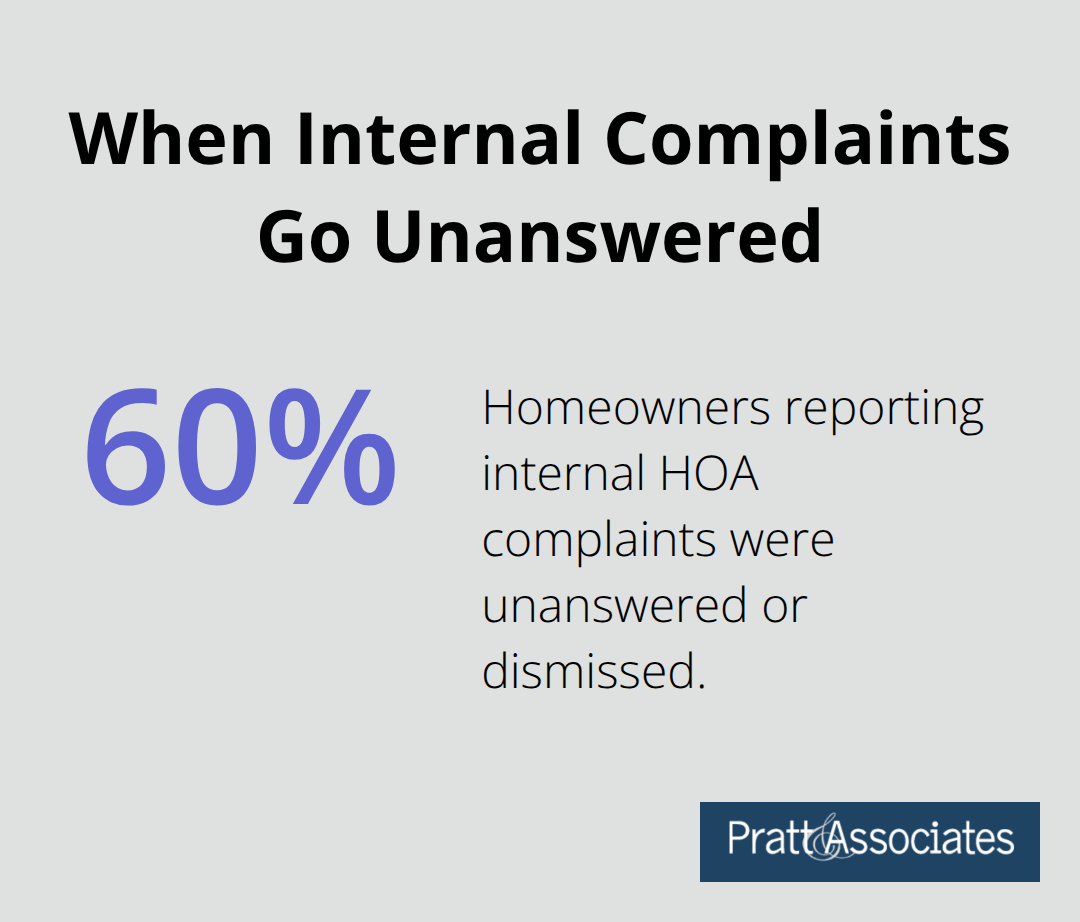
Most homeowners assume their HOA will respond reasonably to complaints. That assumption often proves wrong. Roughly 60% of homeowners who file disputes report their internal complaints went unanswered or were dismissed outright. Before escalating to court, you need to build an ironclad record showing you exhausted every reasonable option.
Start by sending written communication to your HOA board-never rely on verbal complaints. Email works, but certified mail with return receipt creates better documentation. State your specific concern, reference the governing document or regulation violated, and request a written response within 14 days. Keep copies of everything.
Documentation of Unresolved Issues
If the board ignores you, send a second notice over the next 30 days. If they respond but refuse to act, document their reasoning in writing. This paper trail becomes critical if litigation becomes necessary. Courts in Santa Clara County expect homeowners to demonstrate good faith efforts before filing suit.
Some HOAs deliberately delay or avoid addressing legitimate complaints. If you receive no response after two written requests over 30 days, you’ve likely exhausted reasonable communication. At this point, consider sending a formal demand letter outlining the violation, your attempts to resolve it, and the specific action you’re requesting. A demand letter signals serious intent and often prompts faster board action.
Understanding Your Right to Legal Action
If the board still refuses, document their refusal explicitly. Courts view continued inaction as evidence of bad faith. You should also check whether your HOA’s governing documents require internal dispute resolution procedures before litigation. Many California HOAs have architectural review committees or dispute resolution panels (these vary significantly by community). Skipping these steps, even if they seem pointless, can weaken your court case. Verify what your CC&Rs actually require before moving forward.
The specific violations and board responses you document now will shape how a court evaluates your case later. This foundation determines whether you have grounds to proceed with the disputes that actually warrant court intervention.
Common HOA Disputes That Require Court Intervention
Governing Document Violations
Governing document violations top the list of disputes that courts actually hear in Santa Clara County. These aren’t minor infractions-they’re board decisions that directly contradict your CC&Rs, bylaws, or architectural guidelines. A homeowner in Santa Clara County might face an illegal special assessment the board imposed without proper voting procedures, or an architectural denial that contradicts the community’s own standards.
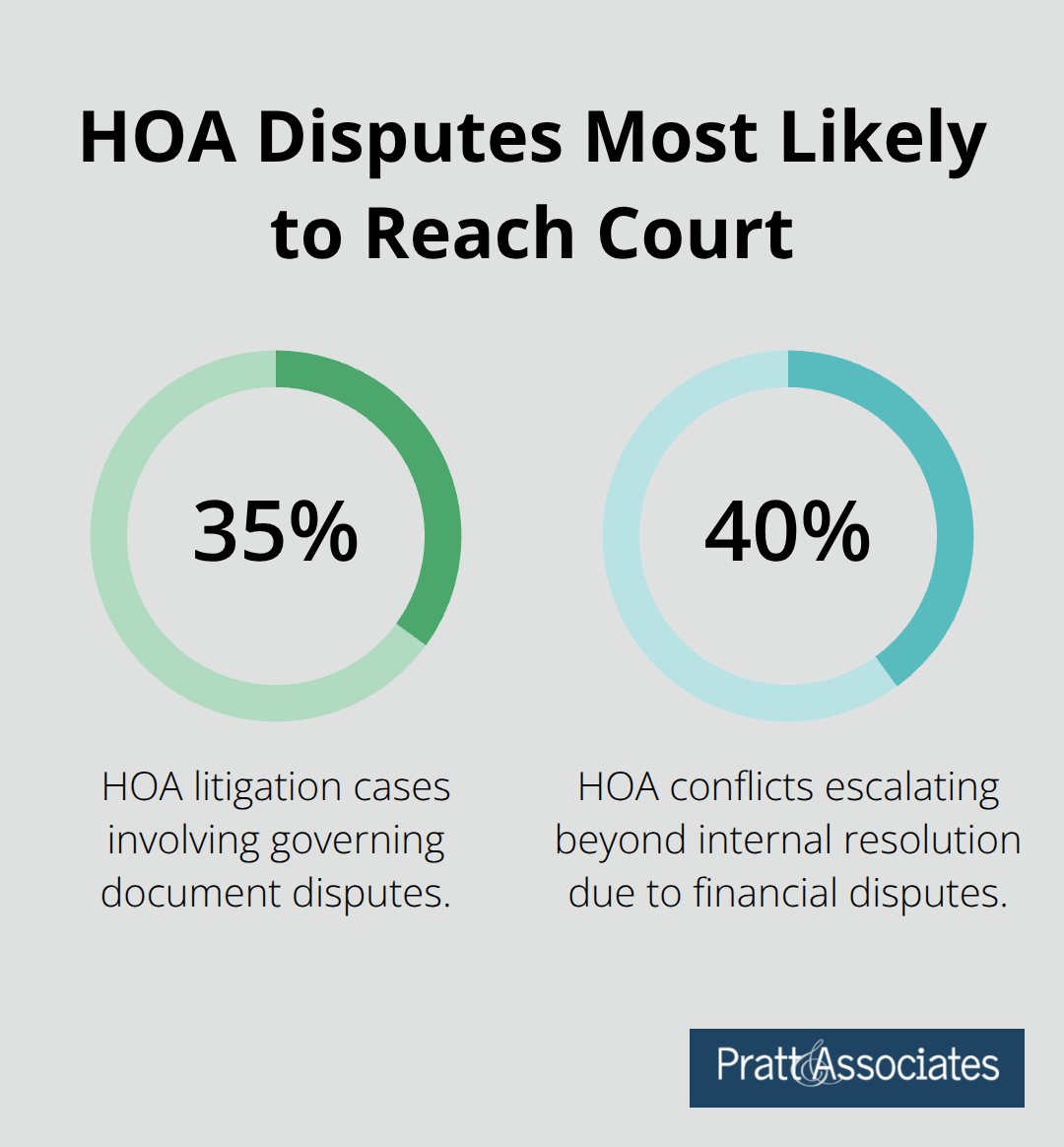
Courts take these seriously because they involve contractual breaches between the HOA and its members. Property-related disputes involving governing documents make up roughly 35% of HOA litigation cases. If your board violated a clear, documented rule in your CC&Rs, you have grounds to pursue court action.
Document the specific regulation violated, the board’s action that breached it, and how that action harmed you financially or restricted your property rights.
Financial Mismanagement and Budget Disputes
Financial mismanagement presents a second category courts will address. This includes unauthorized special assessments, missing reserve funds, inflated budgets without justification, or board members awarding contracts to family businesses at inflated rates. The Community Associations Institute reports that financial disputes account for approximately 40% of HOA conflicts that escalate beyond internal resolution.
If your HOA hasn’t conducted a reserve study in over three years, or if the board approved a special assessment without the required member vote, these violations are actionable. Courts recognize that boards cannot spend community funds without proper authorization or oversight. Financial records and meeting minutes provide the evidence you need to prove these violations in court.
Architectural Control and Property Modification Conflicts
Architectural disputes form the third major category-when a board denies reasonable modification requests that comply with your CC&Rs, or when enforcement remains inconsistent across the community. A homeowner denied approval to install solar panels while another resident’s similar installation received approval demonstrates this inconsistency. Courts recognize that arbitrary architectural decisions violate due process rights.
Santa Clara County courts have consistently ruled that HOAs cannot enforce rules selectively or deny requests without documented reasoning tied to legitimate community standards. Each of these three dispute types has measurable violations you can prove in court, making them fundamentally different from personality conflicts or disagreements about board priorities. The specific evidence you gathered during internal resolution now determines whether you can establish these violations to a judge.
The Court Process for HOA Disputes in Santa Clara County
Filing Requirements and Timeline
Filing your case in Santa Clara County requires meeting specific procedural requirements that courts enforce strictly. You must file a complaint in Superior Court that clearly states the governing document violation, the board’s specific action that breached it, and the damages you suffered. California courts require homeowners to include all factual allegations with enough detail that the board understands the exact claim against them.
Your filing fee ranges from $435 to $750 depending on the amount in controversy. The timeline matters significantly: most courts in Santa Clara County expect you to file within four years of discovering the violation, though some architectural or financial disputes have shorter windows. Before filing, verify whether your HOA’s CC&Rs require arbitration or internal dispute resolution first, as courts will dismiss cases that skip these mandatory steps.
Homeowners often waste thousands filing premature cases that courts immediately reject on procedural grounds. Get the initial filing right because correcting mistakes later costs substantial time and legal fees.
Discovery and Evidence Presentation
Once filed, your case enters discovery where both sides exchange documents and take depositions. This phase typically lasts four to eight months and produces the evidence that determines case outcomes. Request the HOA’s board meeting minutes, reserve studies, architectural approval records, and financial statements directly relevant to your dispute.
Santa Clara County judges frequently rely on documentary evidence rather than testimony, so incomplete discovery handicaps your position significantly. What you uncover during this phase determines whether settlement becomes possible or whether you must present your case to a judge. Prepare your evidence strategically because weak documentation undermines even strong legal arguments.
Mediation and Settlement Opportunities
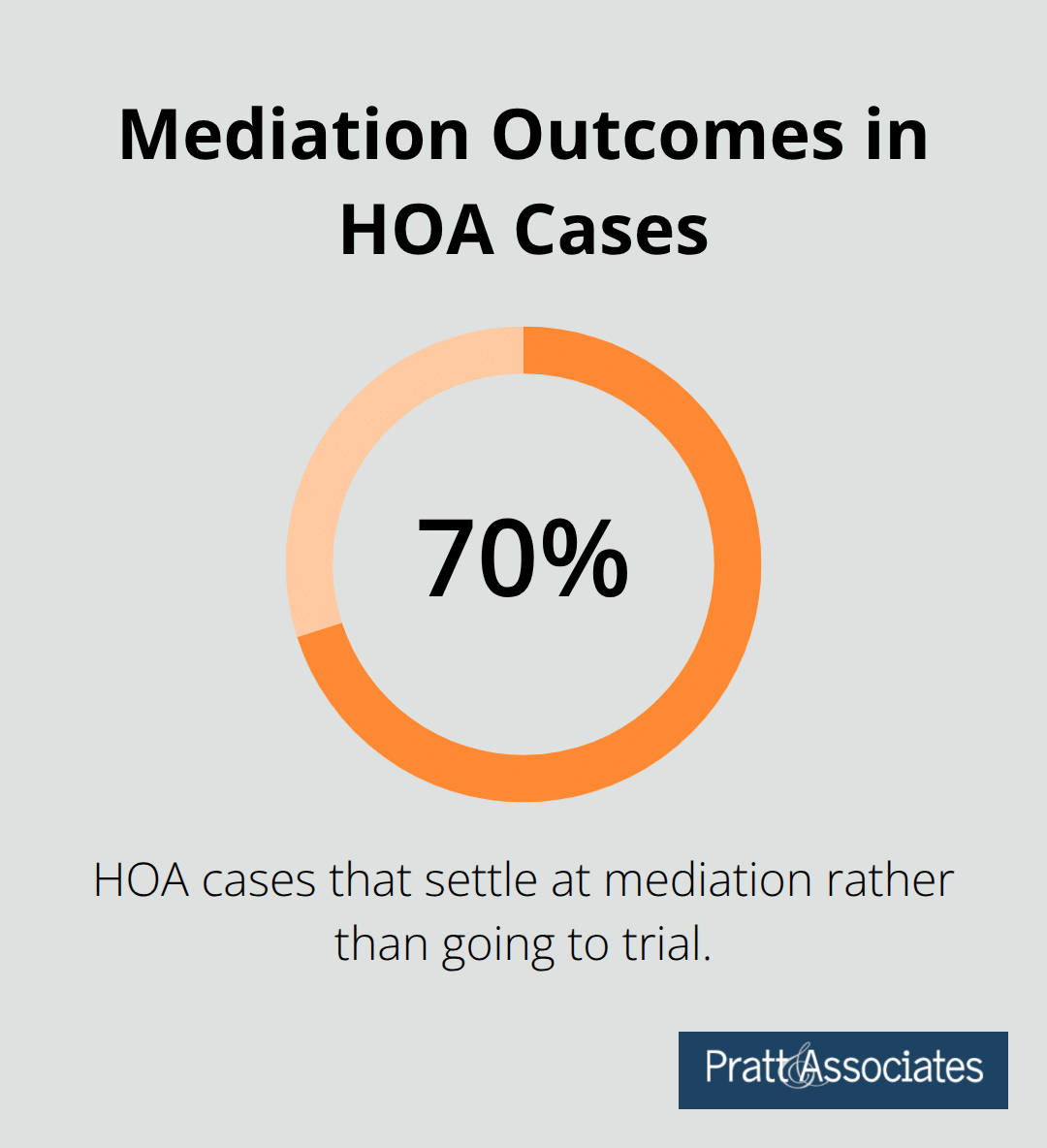
Mediation often occurs after discovery wraps up, and roughly 70% of HOA cases settle at this stage rather than proceeding to trial. Many courts now require mediation before trial, with costs split between parties or absorbed by the court system itself. This structured negotiation process frequently produces outcomes that satisfy both homeowners and boards more effectively than adversarial litigation.
If settlement discussions stall, trial typically occurs within twelve to eighteen months of filing, though complex financial cases may take longer. The mediation phase (often lasting two to four weeks) provides a final opportunity to resolve disputes without the expense and uncertainty of courtroom proceedings.
Final Thoughts
Litigation becomes necessary when your HOA board refuses to follow its own governing documents, mismanages community finances, or enforces rules arbitrarily. The disputes outlined in this post-violations of CC&Rs, unauthorized assessments, and inconsistent architectural decisions-represent situations where courts will intervene. Building a documented record first through written communications and evidence of the board’s refusal to act forms the foundation of any successful case.
Dispute escalation to court requires careful timing. Many homeowners delay filing far too long, allowing statute of limitations to expire or allowing board violations to compound, while others file prematurely without exhausting communication channels and waste thousands on cases courts dismiss immediately. An attorney who understands Santa Clara County HOA law reviews your governing documents, evaluates whether you’ve met procedural requirements, and determines whether your dispute actually warrants litigation. They identify which violations courts will take seriously, handle the technical filing requirements that courts enforce strictly, and guide you through discovery, mediation, and trial if necessary.
Contact Pratt & Associates in Los Gatos to discuss your specific situation and determine your next steps. Our attorneys assess your situation objectively and advise whether court action makes financial sense for your circumstances. We understand that litigation costs time and money, so we help you evaluate whether the potential outcome justifies the investment.