

Receiving an HOA violation notice can feel overwhelming, especially if you’re unsure what it means or how to respond. At Pratt & Associates, we help Santa Clara County homeowners navigate these situations with confidence.
The good news is that violation notices follow specific rules and timelines. Understanding your rights and taking the right steps can make all the difference in resolving the matter quickly.
Understanding HOA Violation Notices in Santa Clara County
What an HOA Violation Notice Actually Means
An HOA violation notice is not a casual warning. It represents a formal document that triggers specific legal timelines and obligations under California law. California Civil Code Section 5300 requires HOAs to provide homeowners with written notice before imposing penalties, and Santa Clara County courts enforce these requirements strictly. When you receive a violation notice, your HOA board has determined that you breached the CC&Rs (Covenants, Conditions, and Restrictions) or HOA rules. The violation could involve an unapproved exterior paint color, a guest parking violation, or landscape maintenance issues. What matters most is understanding that this notice starts a formal process, not ends the conversation.
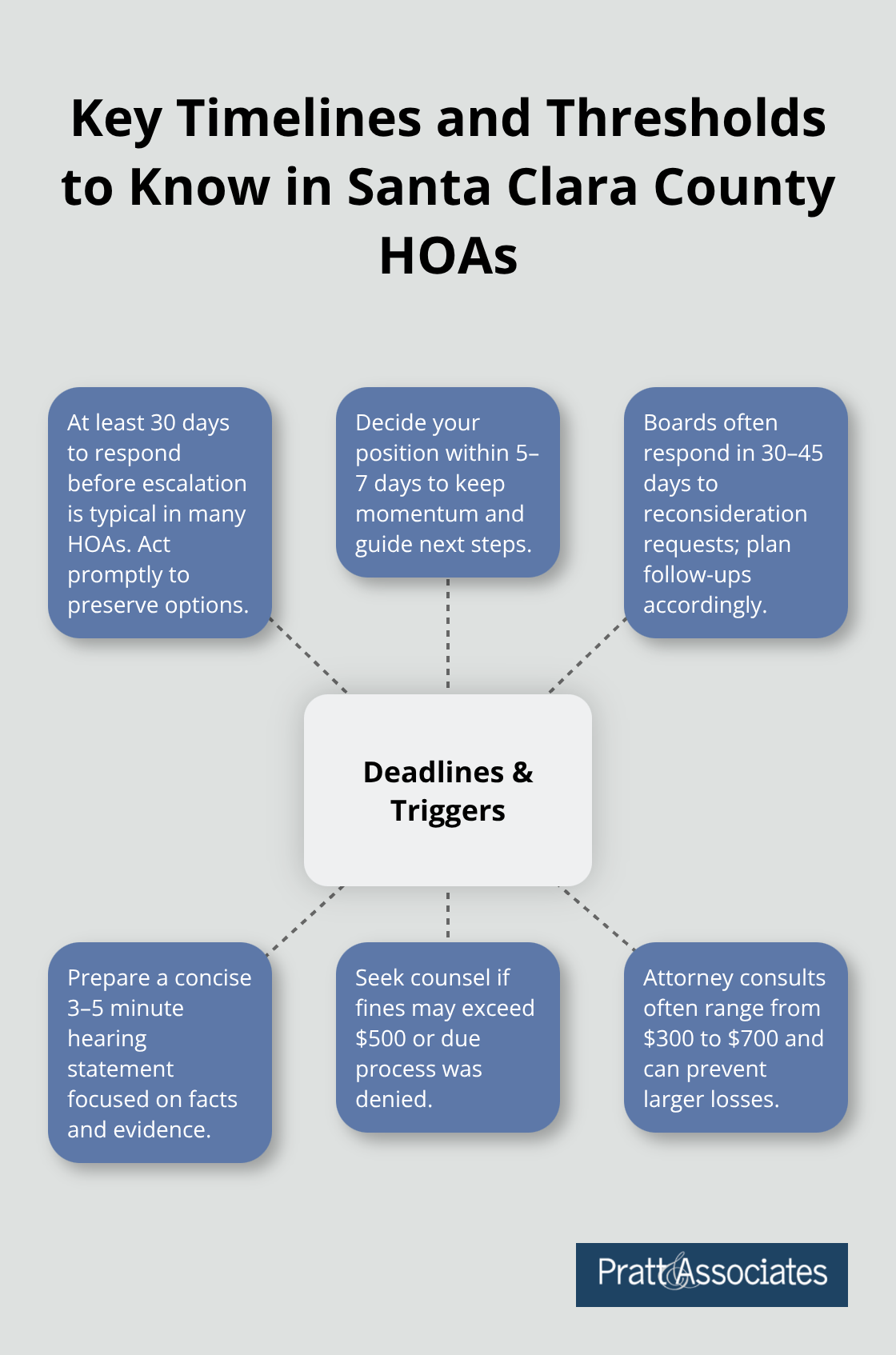
Most Santa Clara County HOAs must give homeowners at least 30 days to respond before escalating to fines or liens, though some associations build in additional time for good faith negotiations. The clock starts the moment you receive the notice, so reading it immediately matters.
Common Violations in Santa Clara County Communities
Most violations fall into predictable categories that appear repeatedly across Santa Clara County. Exterior modifications lead the list-installing solar panels, painting your front door an unapproved color, or adding a fence without architectural approval. Parking violations come second, particularly in communities with limited guest spots or restrictions on commercial vehicles. Landscape and maintenance issues rank third, covering everything from dead plants to overgrown hedges to visible trash cans from the street.
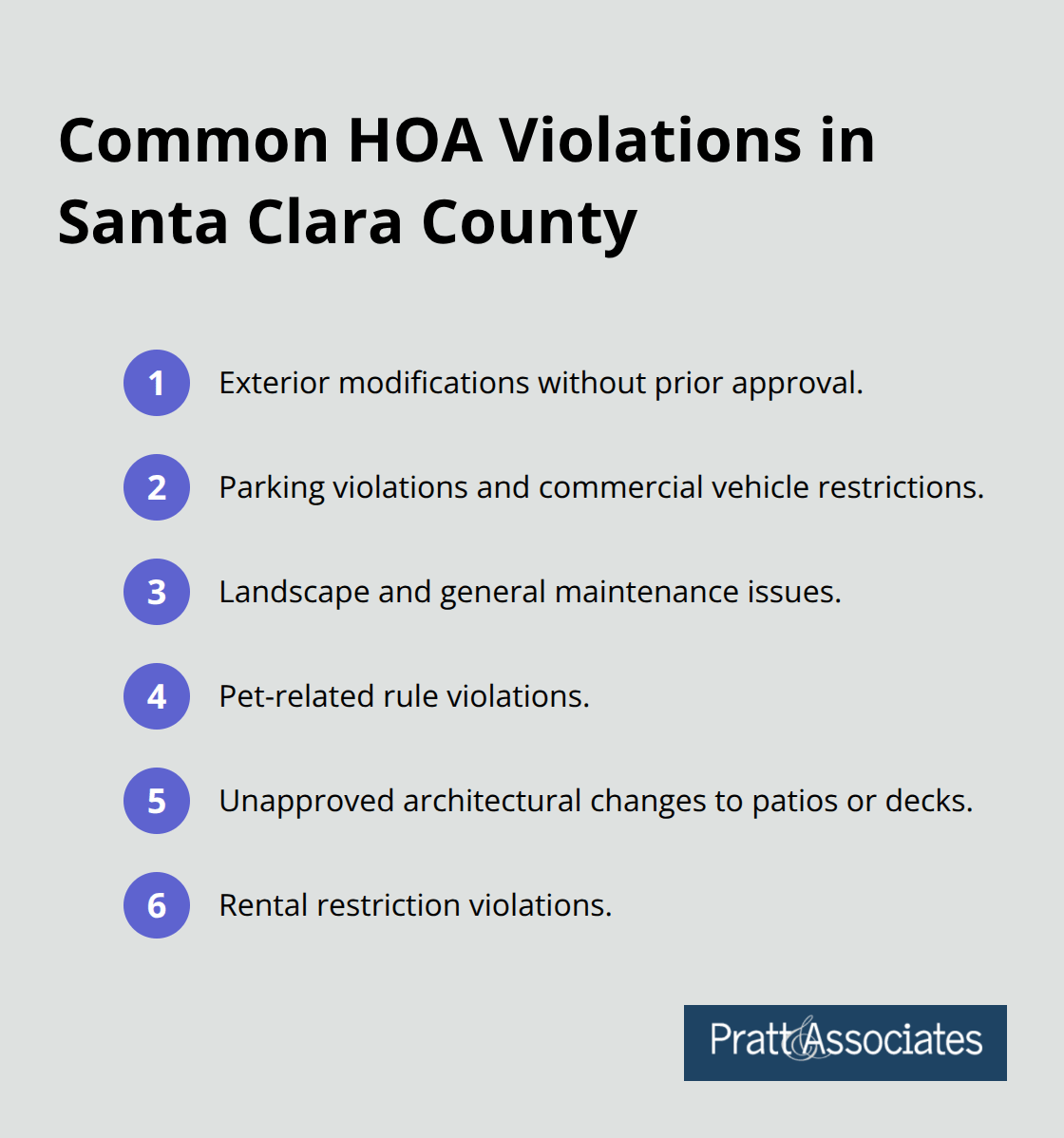
Pet violations, architectural changes to patios or decks, and rental restrictions round out the common offenses.
The key insight here is that most violations involve judgment calls about aesthetics or community standards rather than safety emergencies. This reality means you often have legitimate room to negotiate or dispute the notice.
What Your Violation Notice Must Contain
California law requires that violation notices contain specific information: the alleged violation, the rule or restriction allegedly breached, the date of the violation, and the timeframe for correcting it. If your notice lacks these details, that represents a serious problem for the HOA’s case.
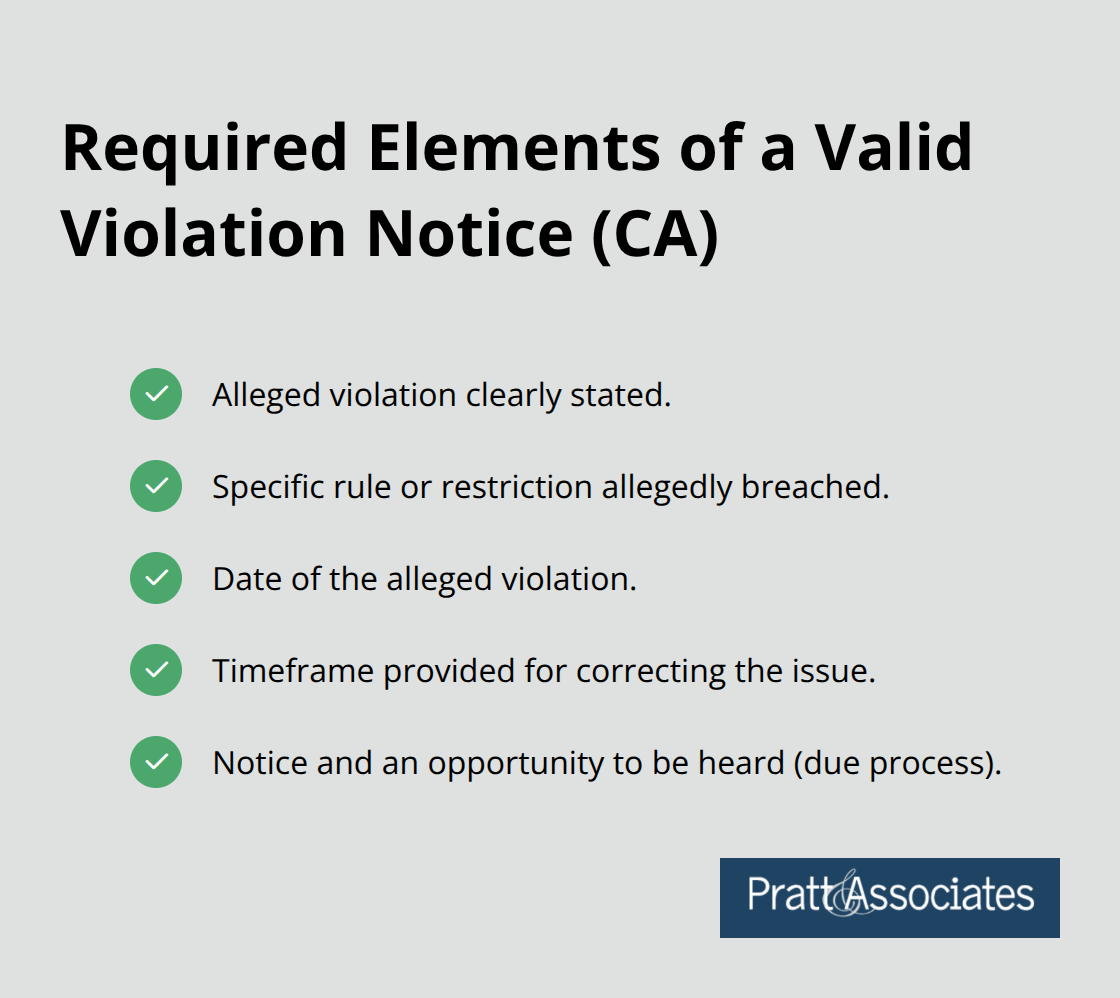
Santa Clara County homeowners should also know that HOAs cannot fine you without following their own procedures first, and those procedures must include notice and an opportunity to be heard-often called the due process requirements under California law.
Understanding these legal requirements positions you to evaluate whether the HOA followed proper procedures. This evaluation becomes your first step toward an effective response.
Your First Response to a Violation Notice
Read the Notice Twice and Check for Errors
The moment you receive a violation notice, your instinct might be to panic or ignore it. Neither approach serves you well. Instead, treat the notice as a document that demands immediate, methodical attention. Read it word-for-word at least twice, checking that the HOA has actually identified you correctly and described a real violation. Mistakes happen frequently. The HOA might have cited the wrong address, misidentified the violation date, or referenced a rule that doesn’t exist in your CC&Rs. California Civil Code Section 5300 requires HOAs to provide accurate notice, and any significant error can undermine their entire case.
Photograph or scan the notice immediately and store it safely. This creates a timestamped record of what the HOA actually claimed and when you received it.
Gather Documentation Related to the Alleged Violation
Next, gather every piece of documentation related to the alleged violation. If the notice claims your landscaping violates community standards, collect photos showing your yard’s condition on the date the HOA claims the violation occurred, plus photos from before and after. If it’s a parking violation, get statements from household members about who parked where and when. For architectural violations like paint color, pull your original approval letters or photos proving the color was previously accepted.
This documentation becomes your defense foundation. Organize materials chronologically so you can present a clear timeline if needed.
Review Your CC&Rs for the Specific Rule Cited
Pull out your CC&Rs and review the specific rule the HOA cited. Read the exact language carefully. Sometimes rules contain exceptions or conditions that the HOA overlooked. For instance, a guest parking rule might exempt overnight visitors or allow temporary exceptions. Understanding what your CC&Rs actually say (versus what the HOA claims they say) reveals whether the HOA misinterpreted the rules or applied them inconsistently.
Determine Your Position Within Five to Seven Days
Within five to seven days of receiving the notice, decide whether the violation actually occurred and whether the HOA’s interpretation is reasonable. This is not about whether you like the rule. It’s about whether you genuinely violated it as written. If you genuinely violated the rule and the HOA followed proper notice procedures, acceptance often saves time and money.
If you believe the notice contains errors, misinterprets the rules, or the violation didn’t actually occur, document your position in writing. This clarity shapes everything that follows and prepares you for the next phase of response.
How to Move Past the Violation Notice
Write a Formal Response Letter to Your HOA Board
Your first step after determining your position should be direct communication with your HOA board. Draft a concise letter addressing the specific violation cited in the notice. If you believe the violation occurred but have extenuating circumstances, explain them clearly. If you disagree with the violation, state exactly why using your CC&Rs as reference. Include copies of your supporting documentation but keep the letter itself to one page. Send this letter via certified mail so you have proof of delivery.
California Civil Code Section 5300 requires HOAs to respond to requests for reconsideration, though they typically have 30 to 45 days to do so. Many Santa Clara County homeowners resolve violations at this stage because board members often reconsider when presented with credible evidence or a reasonable explanation. Treat this as a formal communication, not a casual appeal.
Your tone matters significantly here-avoid emotional language or accusations about unfair treatment. Stick to facts and evidence instead.
Prepare for a Hearing if the Board Denies Your Request
If the board responds with denial, that response typically includes information about your right to a hearing or appeal. Most Santa Clara County HOAs must provide homeowners with a hearing opportunity before imposing fines or liens under California law. Request this hearing in writing and specify your preferred dates and any accommodations you need.
Prepare a three-to-five minute statement explaining your position, and bring your documentation organized in a clear folder. At the hearing, present your facts calmly and directly. Many homeowners make the mistake of becoming confrontational or launching into lengthy personal stories at hearings. Hearing officers and board members respond better to organized, factual presentations.
Consider Legal Representation for Serious Violations
If you lose the hearing or feel the process was unfair, that’s when an HOA attorney becomes valuable. We at Pratt & Associates represent Santa Clara County homeowners in HOA disputes, and we recommend consulting with an attorney if the HOA threatens liens, fines exceeding five hundred dollars, or if you believe the HOA violated your due process rights.
An attorney can review whether the HOA followed its own procedures, whether the rules were applied consistently to other homeowners, and whether California law was properly followed. This consultation often costs between three hundred and seven hundred dollars but can save thousands if it prevents an improper lien or fine.
Final Thoughts
Violation notices in Santa Clara County demand immediate attention and organized action. Read the notice carefully within the first few days, gather documentation to support your position, and communicate formally with your HOA board through certified mail. Whether you agree with the violation or believe it contains errors, your response determines the outcome far more than the notice itself.
California law gives you specific windows to respond and request hearings, and missing these deadlines eliminates your options. If the HOA denies your request or you lose a hearing, that’s when you should consult with an attorney who understands HOA regulations. We at Pratt & Associates help Santa Clara County homeowners navigate these disputes and protect their property rights under California law.
Violation notices are not final judgments-they mark the beginning of a process where you have real opportunities to respond and resolve the matter fairly. Acting quickly and staying organized gives you the best chance of a favorable outcome.