

Your HOA’s governing statute compliance isn’t optional-it’s the foundation of fair management and member protection. Many homeowners in Santa Clara County don’t realize their board may be breaking California law through hidden budgets, improper fee handling, or inadequate notice procedures.
At Pratt & Associates, we’ve seen firsthand how non-compliance creates conflict and financial harm. This guide shows you what California requires, how to spot violations, and what steps to take if your HOA falls short.
What California Law Actually Requires From Your HOA
California’s Davis-Stirling Common Interest Development Act sets the legal floor for HOA operations, and it’s far more specific than most homeowners realize. The law, codified in California Civil Code sections 4000 and beyond, requires that your HOA’s CC&Rs, articles of incorporation, and bylaws comply with state standards and are properly recorded. Improper recording can invalidate enforcement actions, leaving your community without legal protection. Your board must verify that these governing documents don’t contain discriminatory language or outdated provisions that conflict with current California law. If your HOA hasn’t reviewed its documents in the past five years, that’s a red flag worth investigating immediately.
Financial Disclosure Operates on Strict Timelines
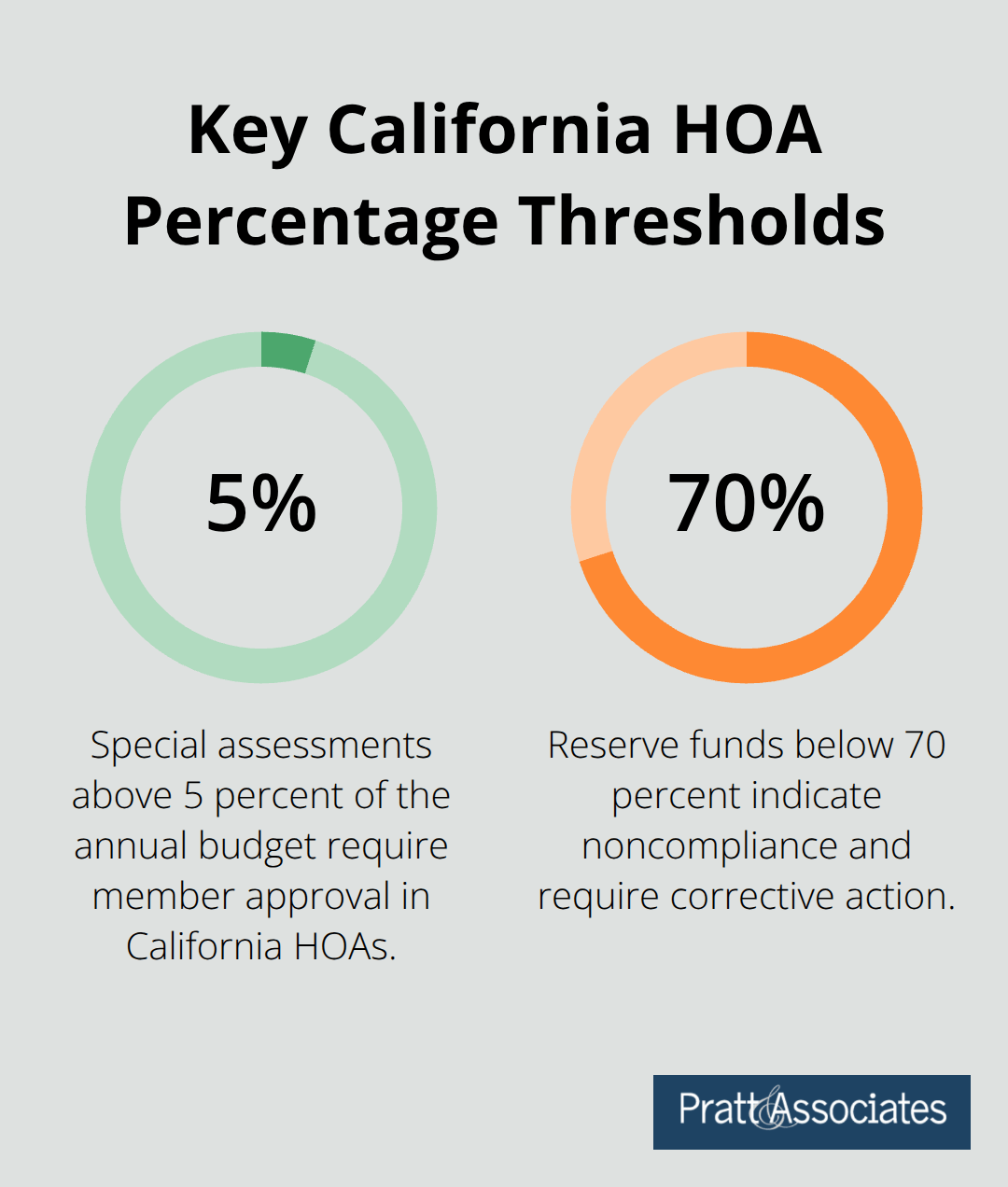
California law mandates that HOAs provide members with annual financial statements and reserve studies. Boards must make GAAP-compliant financial statements available to members, and many HOAs must conduct independent audits or reviews by a certified public accountant. A reserve study identifies major components of the community, estimates their remaining useful life, and projects funding needs for the next 30 years. Special assessments above 5 percent of the annual budget require member approval-anything below that threshold can be imposed by the board alone, but this doesn’t mean the board should avoid transparency. HOAs that hide reserve fund shortages typically face far larger problems down the road when emergency assessments become unavoidable. Request your HOA’s most recent reserve study and audit immediately; if the board claims one doesn’t exist or is unavailable, that violation alone warrants escalation.
Meeting Procedures and Voting Rights Carry Legal Weight
California requires that HOA board meetings remain open to members with accessible agendas and minutes, though executive sessions are permitted for confidential matters like litigation or personnel issues. Voting rights typically follow ownership proportions (usually one vote per lot), but your HOA’s governing documents may specify otherwise. The law protects you from disproportionate voting power being granted to absentee owners or multi-lot holders without clear policy justification. When the board fails to post meeting notices in advance or doesn’t provide minutes to requesting members, that’s a direct violation of Davis-Stirling requirements. Check whether your HOA posts notices at least four days before meetings and whether minutes are available within 30 days afterward; many non-compliant boards drag out minutes for months.
How to Verify Your HOA’s Compliance Status
Start by obtaining your HOA’s governing documents and comparing them against current California Civil Code requirements. Request the board’s financial statements, reserve study, and meeting minutes from the past two years. Look for gaps in documentation or resistance from board members when you ask for records-that hesitation often signals compliance problems. If you spot violations in these materials, you have clear grounds to escalate your concerns to the board or seek outside guidance.
What Noncompliance Actually Looks Like in Santa Clara County
Hidden or Incomplete Financial Reporting
Hidden or incomplete financial reporting represents the most common compliance failure in Santa Clara County HOAs. When a board refuses to provide reserve studies, delays financial statements beyond 30 days of your request, or claims that audit reports don’t exist, the board violates California Civil Code Section 5500. A board that resists transparency on reserve fund status almost always hides a problem-either inadequate reserves that would trigger special assessments or mismanagement of existing funds.
Request your HOA’s most recent reserve study and ask specifically for the funded reserve percentage. California law requires HOAs to fund reserves at a minimum level, and boards that fall below 70 percent funding operate in violation. If the board claims the reserve study is confidential or unavailable, that statement is false-members hold a statutory right to access these documents. Some boards attempt to hide budget shortfalls by simply not conducting reserve studies at all, which violates California law and leaves the community defenseless when major repairs become necessary.
Improper Assessment Handling
Special assessments imposed without proper notice, member voting when required by law, or assessments that exceed 5 percent of the annual budget without member approval constitute direct violations. Boards that collect architectural review fees without documenting what those fees fund, or that enforce architectural rules inconsistently against certain homeowners while ignoring violations from others, create liability and breach their fiduciary duty to all members equally.
California courts have consistently ruled that HOAs cannot enforce rules arbitrarily. If your neighbor’s unapproved fence remains standing while yours faces fines, document that inconsistency and report it. Fines themselves must follow strict due-process requirements, including written notice, a hearing opportunity, and formal documentation before collection. Boards that levy fines without providing a hearing or written explanation violate Davis-Stirling requirements.
Documenting Enforcement Violations
Request copies of all enforcement actions taken against properties in your community over the past two years. If the board cannot produce consistent documentation or if enforcement appears selective, that evidence of noncompliance warrants escalation. Inconsistent enforcement patterns reveal whether your board applies rules fairly across the community or targets certain homeowners unfairly.
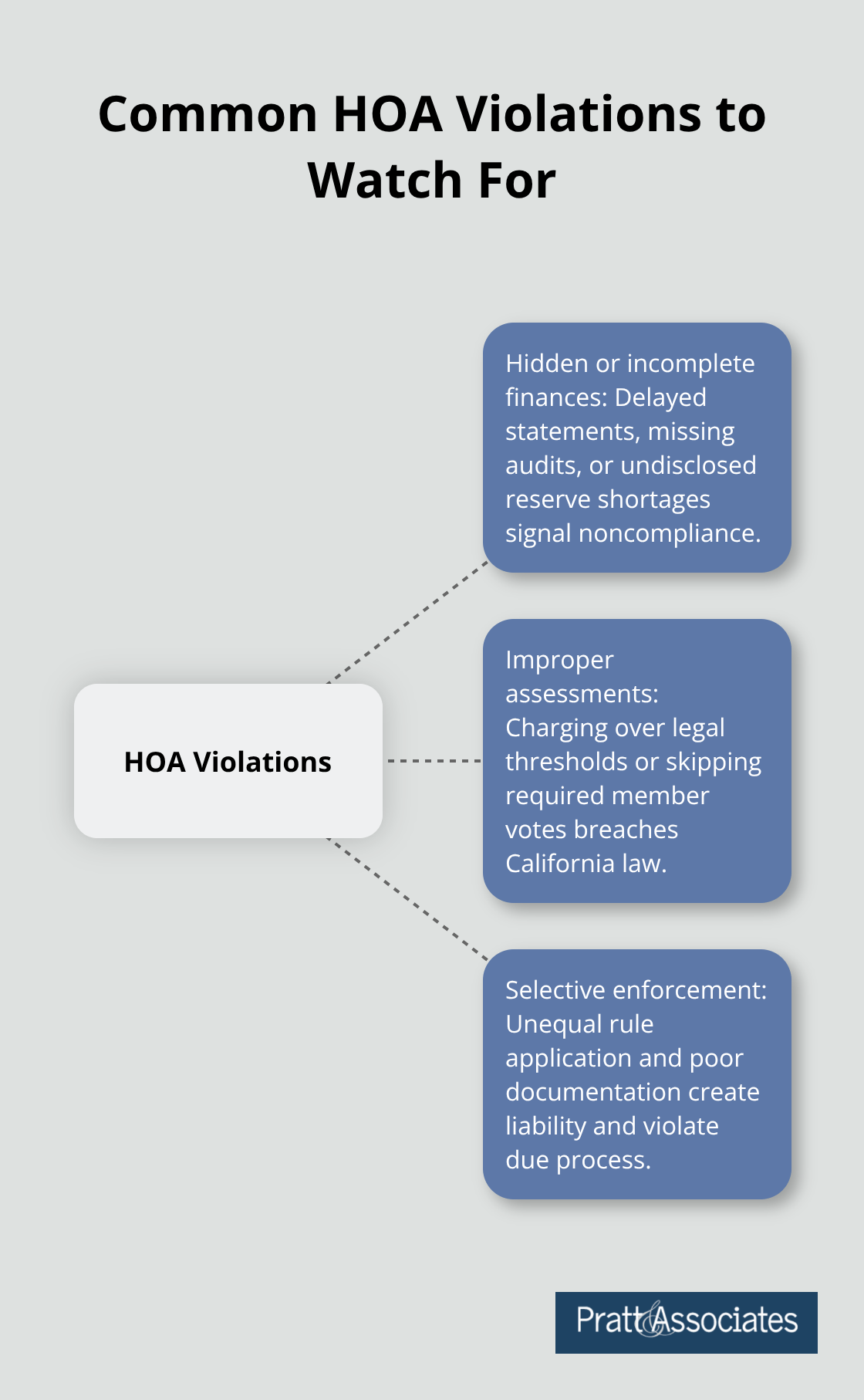
These violations-hidden finances, improper assessments, and selective enforcement-form the foundation for the corrective steps you can take next.
What to Do When Your HOA Violates California Law
Start by obtaining every document your board controls. Send a written request to your HOA’s management company or board secretary asking for the past two years of financial statements, reserve studies, meeting minutes, architectural review decisions, and enforcement records. California Civil Code Section 5200 gives you the statutory right to access these materials within 10 business days, so if the board delays beyond that timeline, document the delay with dates and names.
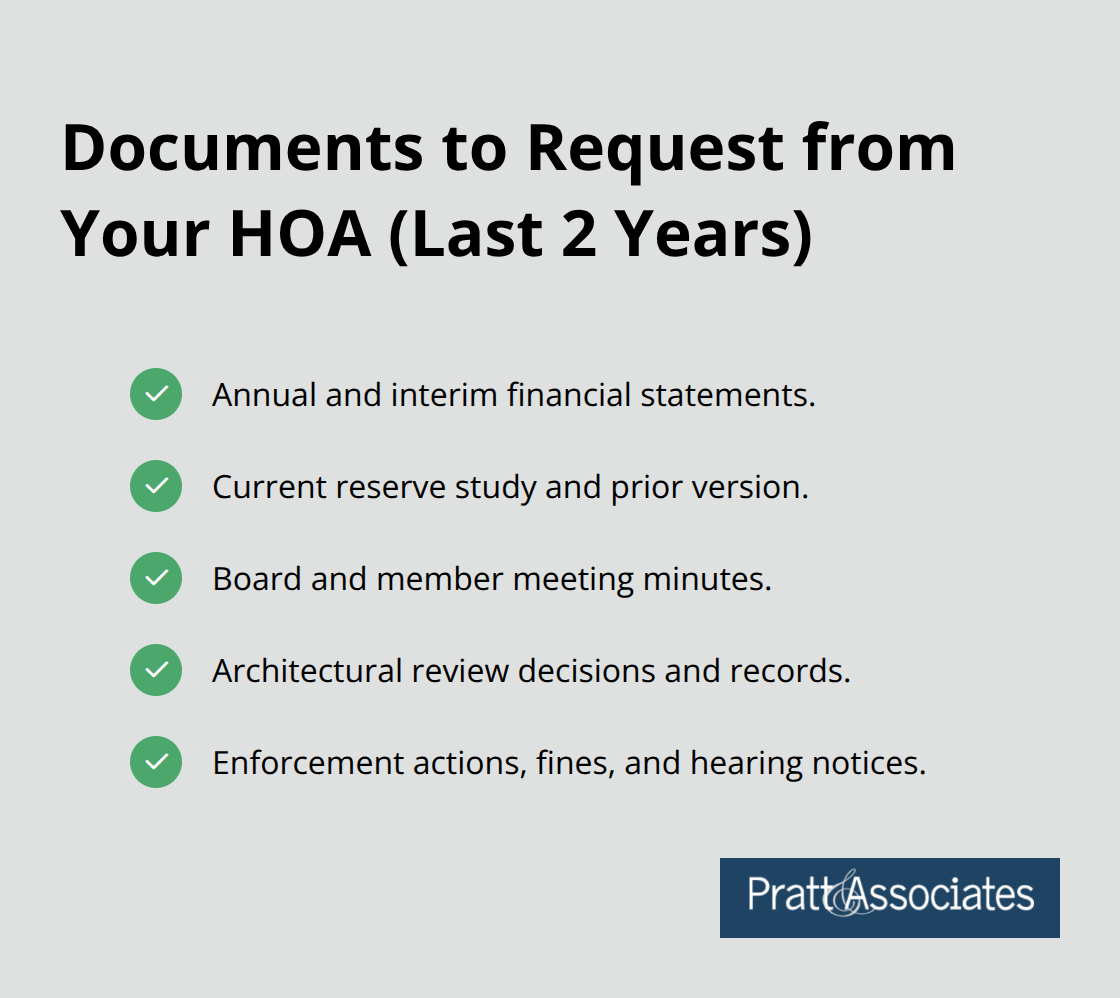
Many Santa Clara County homeowners spot violations only after reviewing these records side-by-side-inconsistent enforcement patterns, missing reserve studies, or financial statements that don’t match the budget become obvious when you have the full paper trail.
Compare Your Documents Against State Law
Compare your HOA’s CC&Rs and bylaws against current California Civil Code requirements, particularly sections 4000 through 5800. If you spot language that contradicts state law (such as rules allowing the board to impose special assessments without member voting or provisions that eliminate your right to attend meetings), those provisions are void regardless of what your governing documents state. Take screenshots of any board communications that admit noncompliance, such as emails stating the reserve study is confidential or messages explaining why certain financial records cannot be provided. This documentation creates a clear record of the violations you’ve identified.
File a Formal Notice With Your Board
Send your HOA board a formal letter detailing the specific violations you’ve identified, citing the relevant California Civil Code sections, and requesting correction within 30 days. This creates a paper trail and often prompts boards to comply once they realize you understand the law. If your board ignores the 30-day notice, file your complaint with the California Department of Consumer Affairs with copies of all correspondence attached. The Department investigates violations statewide and can order boards to comply with state law. Some Santa Clara County HOAs respond immediately to formal complaints; others require escalation to state agencies.
Pursue Mediation or Legal Action
Mediation works best when the board simply doesn’t understand California requirements rather than deliberately violating them. Many Santa Clara County mediation services offer HOA-specific dispute resolution at lower cost than litigation. Request mediation through your board first; if they refuse, contact the local mediation center or county bar association for referrals. Litigation becomes necessary when boards refuse to comply with state law despite formal complaints and when noncompliance directly harms your property rights or finances-for example, when improper special assessments drain your equity or when selective enforcement targets your property unfairly. California courts consistently rule against boards that violate Davis-Stirling requirements, and boards that lose litigation face attorney fees and damages. Document every violation with dates, amounts, and specific code sections throughout this process. Your written record determines whether you can recover damages if litigation proceeds. If you face significant financial harm or selective enforcement affecting your property rights, consult an attorney who handles HOA compliance disputes and can evaluate whether your situation warrants legal action.
Final Thoughts
Governing statute compliance directly affects your wallet, your property rights, and your ability to live peacefully in your community. When your HOA board ignores California’s Davis-Stirling requirements, you face hidden special assessments, selective enforcement, and financial decisions made without transparency. Start by requesting your HOA’s governing documents, financial statements, and meeting minutes, then compare what you receive against the California Civil Code requirements outlined in this guide.
Many boards comply immediately once they understand that members know the law and will enforce it. Santa Clara County offers resources to support your efforts-the California Department of Consumer Affairs investigates HOA violations statewide and can order boards to comply with state law, while local mediation services provide cost-effective dispute resolution when boards are willing to work toward solutions. If you’ve identified serious violations affecting your property or finances, consulting with an attorney becomes essential to protect your rights.
We at Pratt & Associates handle real estate disputes including HOA compliance issues and can help you understand your options (visit our website to learn more about how we can assist you). Your rights as an HOA member exist in California law whether your board acknowledges them or not. Document violations, communicate formally with your board, and escalate through proper channels when necessary.