

Selecting the right HOA attorney in Santa Clara County can make the difference between resolving disputes quickly and facing prolonged legal battles. The wrong legal counsel selection leaves your homeowners association vulnerable to costly mistakes and unresolved conflicts.
We at Pratt & Associates know that finding an attorney who understands both HOA law and your community’s specific needs requires careful evaluation. This guide walks you through what matters most when making this decision.
What Separates Strong HOA Attorneys from Mediocre Ones
Track Record and Specific Case Experience
An HOA attorney’s track record matters far more than their marketing materials suggest. When evaluating potential candidates, request specific numbers: How many HOA cases have they handled in the past three years? How many cases went to trial versus settlement? What percentage involved covenant enforcement, financial disputes, or architectural conflicts? Attorneys who hesitate to provide these details likely lack the depth you need.
Local Knowledge of Santa Clara County Regulations
Santa Clara County HOA law contains nuances that don’t apply statewide, particularly around architectural review standards and assessment collection procedures. An attorney unfamiliar with local court preferences, county-specific regulations, and how judges in your area interpret the California Davis-Stirling Common Interest Development Act will cost you money through inefficiency. Ask potential candidates about their familiarity with Santa Clara County Superior Court judges who handle HOA matters and whether they’ve appeared before your specific judge. Local knowledge isn’t optional-it’s foundational.
Communication Speed and Accessibility
Responsiveness separates adequate representation from reliable counsel. Many HOA disputes escalate because communication breaks down between the association and its attorney. Before hiring, establish clear expectations: What’s their typical response time for emails and calls? Do they assign a dedicated contact person, or will you reach different staff members each time? Will they attend board meetings, or only handle matters remotely?
Request references from three recent HOA clients and specifically ask how quickly the attorney returned communications during critical disputes. An attorney who takes two weeks to respond to urgent matters creates unnecessary risk. When you contact a potential attorney, pay attention to how promptly they respond to your initial inquiry-this behavior typically predicts their future responsiveness.
Moving Forward With Your Evaluation
The attorneys you interview should demonstrate both technical knowledge of Santa Clara County regulations and genuine commitment to staying connected with your board throughout disputes. This combination determines whether your association receives proactive guidance or reactive damage control.
Common HOA Legal Issues That Require Attorney Representation
Covenant Enforcement and Violation Disputes
Most HOA boards face at least one significant legal issue within their first five years of operation, according to data from the Community Associations Institute. Covenant enforcement disputes arise when homeowners ignore restrictions on property modifications, rental policies, or maintenance standards. These cases demand immediate legal attention because delays allow violations to spread across the community and create precedent problems.
Boards should consult legal counsel the moment a homeowner threatens litigation over a covenant violation rather than waiting months for escalation. An attorney familiar with Santa Clara County regulations will identify which disputes can resolve through negotiation and which require formal legal action, preventing unnecessary litigation costs while protecting your association’s interests.
Financial Management and Budget Disputes
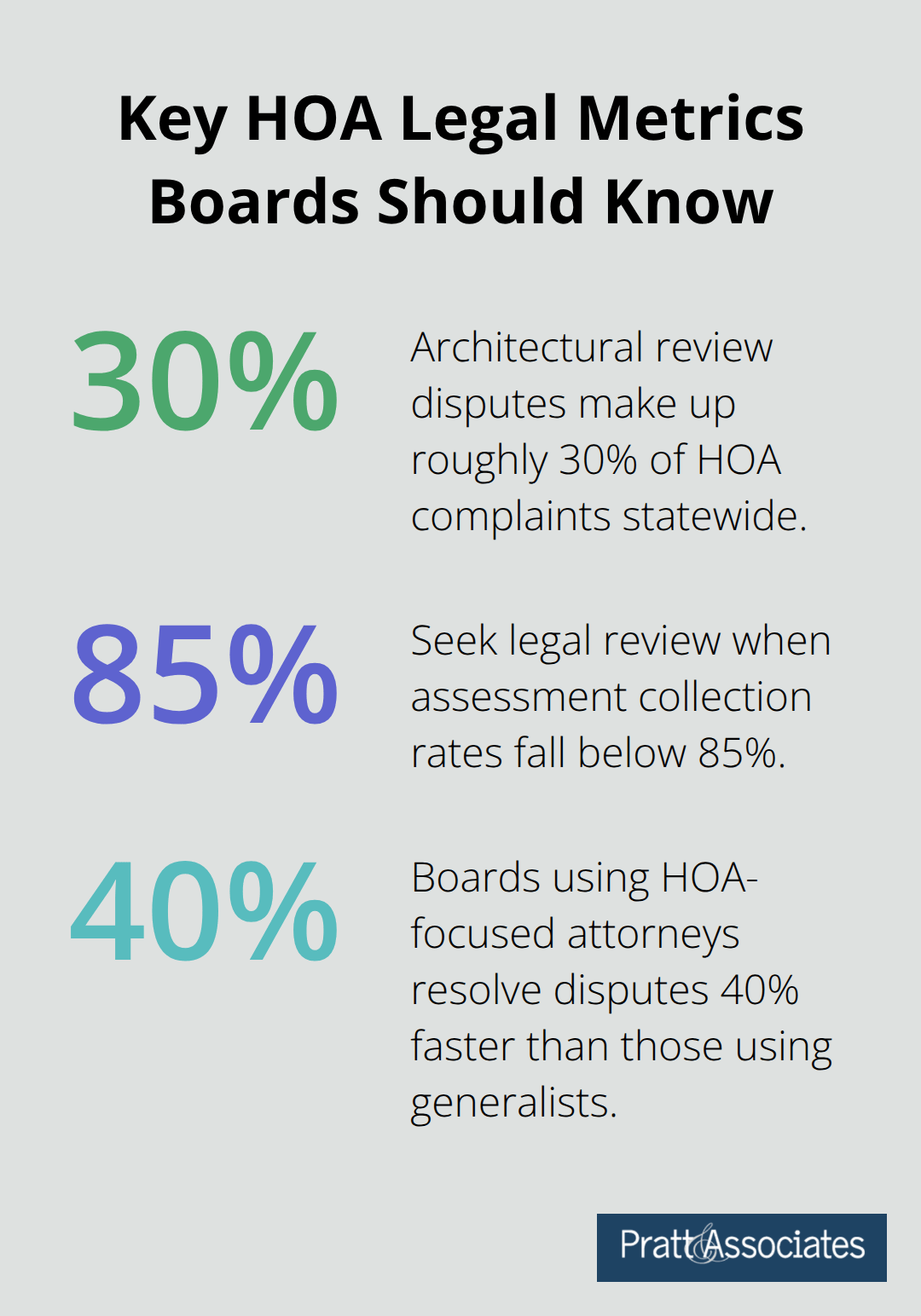
Financial disputes typically involve assessment collection failures, budget misallocations, or unauthorized spending by board members. These situations require immediate legal review if your association cannot account for funds, if board members made unauthorized expenditures, or if assessment collection rates drop below 85 percent.
Santa Clara County courts have consistently ruled that boards acting without legal guidance on financial matters expose themselves to personal liability. An attorney will help you recover misappropriated funds and establish controls that prevent future problems.
Architectural Review and Modification Conflicts
Architectural conflicts occur when homeowners propose modifications that violate CC&Rs or when boards deny requests that should have been approved under Santa Clara County standards. The California Department of Consumer Affairs reports that architectural review disputes represent roughly 30 percent of all HOA complaints filed statewide, making this category particularly contentious.
Architectural conflicts demand attorney involvement when a homeowner formally appeals a denial, when a modification creates safety concerns, or when board decisions conflict with your governing documents. These disputes often hinge on interpreting local regulations correctly-a mistake that costs associations thousands in legal fees later.
Understanding which disputes require legal intervention separates proactive boards from those managing crises. The next section covers the specific questions you should ask potential attorneys to determine whether they can handle your association’s unique legal challenges.
Vetting HOA Attorneys Before You Hire
Quantify Their HOA Experience
The questions you ask potential attorneys reveal far more than their answers do. Most boards waste this opportunity by accepting surface-level responses about experience and fees. Instead, push for specifics that expose whether an attorney actually understands Santa Clara County HOA law or simply handles real estate matters generally.
When you ask how many years they’ve worked with HOA cases, reject vague answers like “over 15 years in real estate.” Press for the actual number of HOA disputes they’ve handled in the past three years, how many involved Santa Clara County courts, and what percentage resulted in favorable outcomes for associations versus individual homeowners. Attorneys hesitant to quantify their HOA experience likely spend most of their time on transactions or other practice areas.
The Community Associations Institute reports that boards working with attorneys who primarily focus on HOA law resolve disputes 40 percent faster than those using generalist counsel. Ask whether they’ve represented boards facing the specific type of dispute your association currently faces-covenant enforcement, financial mismanagement, or architectural conflicts demand different tactical approaches.
Understand Their Dispute Resolution Philosophy
Their approach to resolving disputes matters more than you’d expect. Some attorneys immediately pursue litigation because it generates higher billable hours, while others negotiate settlements that protect your association’s long-term community relationships. Ask directly: What percentage of your HOA cases settle before trial, and what percentage go to judgment?
If they claim most cases settle, ask why-genuine settlement specialists can explain their negotiation framework and point to specific situations where settlement served clients better than litigation. This conversation separates attorneys who prioritize your association’s interests from those who prioritize their own revenue.
Establish Clear Fee Structures and Billing Practices
Demand clarity on fee structure before engagement. Santa Clara County HOA attorneys typically charge between $250 and $450 per hour, though some offer flat fees for specific services like covenant enforcement letters or CC&R reviews. Ask whether they bill in six-minute increments or larger time blocks, as six-minute billing adds 30 to 40 percent to your costs through administrative overhead.
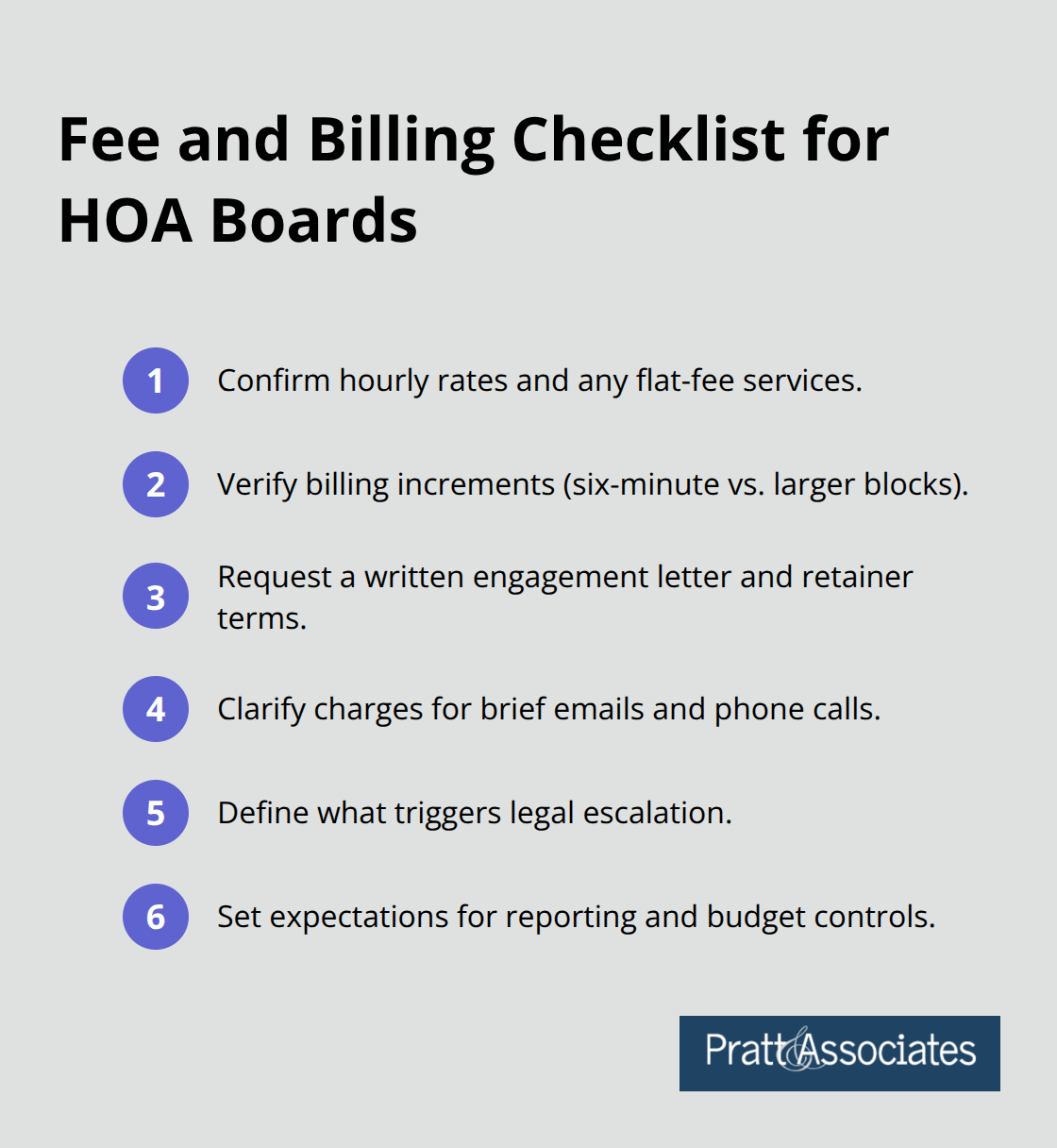
Request a written engagement letter specifying hourly rates, retainer amounts if required, and whether they charge for email responses and phone calls under five minutes. Most importantly, establish upfront what triggers legal escalation-many boards hemorrhage money through unnecessary attorney involvement on matters that don’t warrant legal fees. This conversation prevents surprise bills and ensures your association controls legal spending.
Final Thoughts
Selecting the right HOA attorney in Santa Clara County requires balancing three core factors: demonstrated experience with HOA disputes, deep familiarity with local regulations, and genuine responsiveness to your board’s needs. An attorney who quantifies their HOA case history, explains their dispute resolution approach, and provides transparent fee structures gives your association the foundation for effective legal counsel selection. Generic real estate attorneys cost more money through inefficiency because they lack the specialized knowledge that Santa Clara County HOA law demands.
Local representation matters more than most boards realize, as Santa Clara County courts maintain specific preferences and judges develop patterns in how they interpret the Davis-Stirling Act. Your legal counsel selection process should include requesting references from recent HOA clients and asking specifically about communication speed during critical moments. Establish written fee agreements before engagement, clarify what triggers legal escalation, and confirm whether they’ve handled disputes similar to what your association currently faces.
Contact Pratt & Associates if your board needs guidance navigating Santa Clara County HOA regulations or handling active disputes. The right legal representation protects your association’s interests and prevents costly mistakes that compound over time.