

Unpaid HOA assessments create serious problems for communities and individual homeowners alike. When residents fall behind on payments, boards need clear strategies to recover what’s owed.
At Pratt & Associates, we’ve seen assessment collection become increasingly complex as homeowners face financial challenges and disputes over fees. This guide walks through the legal tools available, the step-by-step collection process, and the real obstacles boards encounter along the way.
Legal Tools HOAs Use to Collect Unpaid Assessments
Property Liens: The First Line of Defense
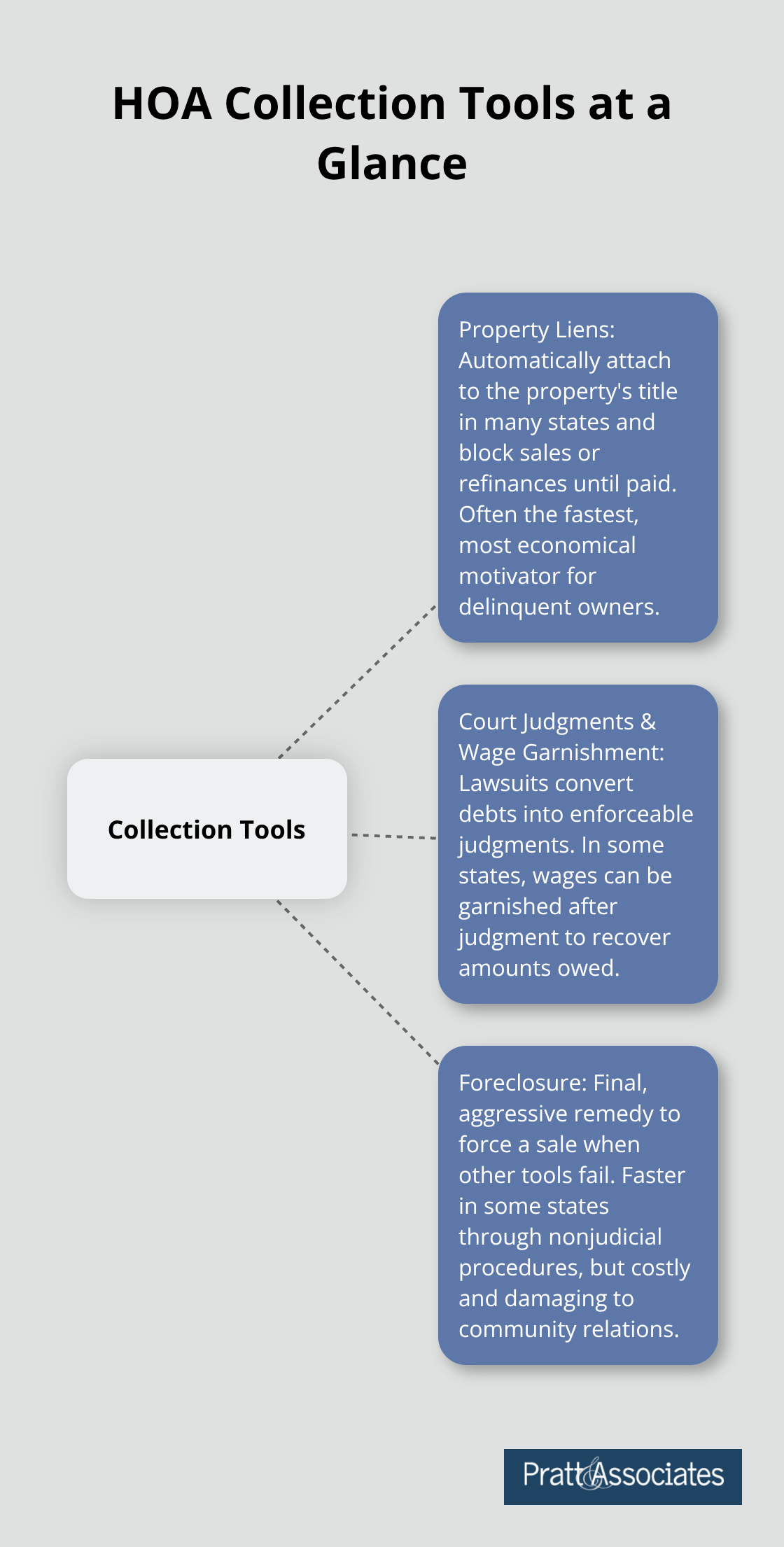
HOA boards have three primary legal mechanisms to recover unpaid assessments, and understanding when to use each one makes the difference between collecting money and spending years in litigation. Property liens represent the first and most powerful tool. When a homeowner fails to pay assessments, most state laws automatically grant HOAs a lien against the property. This lien attaches to the home’s title and must be satisfied before the owner can sell, refinance, or transfer the property.
The advantage is immediate and tangible: homeowners face real financial pressure because lenders won’t approve mortgages or refinances with unpaid HOA liens on record. According to data from the Community Associations Institute, approximately 40% of delinquent accounts resolve once homeowners understand a lien has been filed. The lien process typically costs between $500 and $2,000 in legal fees, making it far more economical than pursuing other remedies.
Court Judgments and Wage Garnishment
When liens fail to motivate payment, HOA boards can pursue court judgments. Filing a lawsuit forces the homeowner to defend against the claim in court, and if the HOA prevails, the judgment becomes a legal determination of the debt. Some states allow wage garnishment following a judgment, meaning money gets deducted directly from the homeowner’s paycheck.
This path demands significant time and money. Court cases typically cost $3,000 to $7,000 in legal fees alone, and the process stretches across six to eighteen months depending on the jurisdiction. Boards should weigh whether the debt amount justifies this investment before moving forward.
Foreclosure: The Final Option
Foreclosure represents the most aggressive collection method available to HOA boards. After a homeowner falls sufficiently behind and doesn’t respond to liens or judgments, the HOA can foreclose on the property, essentially forcing a sale to recover the debt. California and other states permit HOA foreclosures without court involvement in certain situations, which accelerates the process considerably.
Foreclosure typically requires at least six to twelve months and costs $5,000 to $15,000 in legal and administrative fees. The process destroys the homeowner’s credit and often damages community relations, so boards should only pursue it when other remedies have genuinely failed and the debt justifies the expense. Understanding these escalating options prepares boards for what comes next: the actual step-by-step collection process that determines when and how each tool gets deployed.
How the Collection Process Actually Works
Initial Payment Demands Set the Foundation
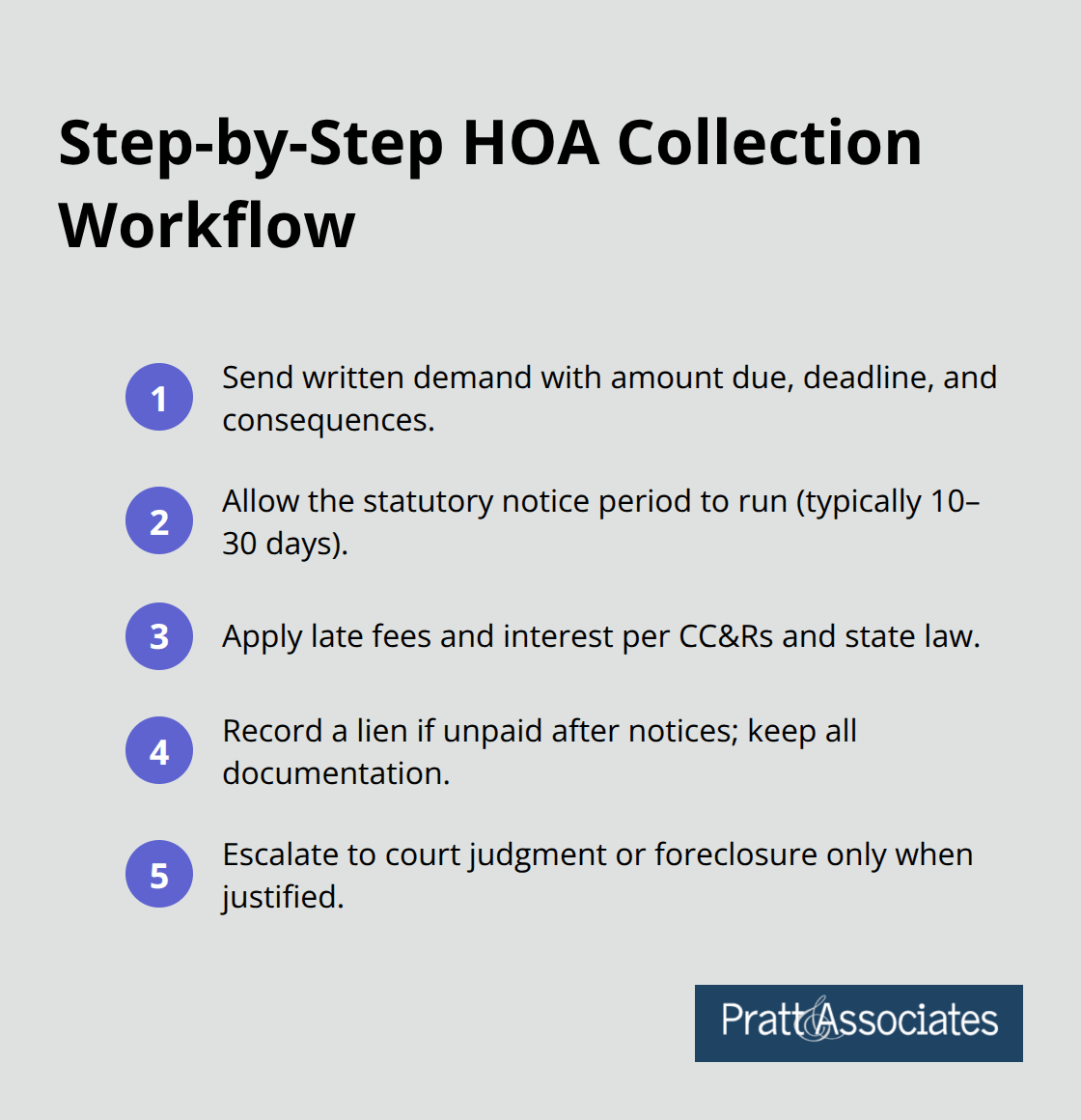
Boards that jump straight to liens without sending proper notices waste time and damage relationships unnecessarily. The collection process starts with a written payment demand that clearly states the amount owed, the due date, and consequences for non-payment. Most state laws require HOAs to send this notice before filing a lien, and the notice period typically ranges from ten to thirty days depending on your state’s regulations.
Send this notice via certified mail so you have proof of delivery. Many homeowners simply forget about assessments or miss statements, and a clear demand often resolves the situation without legal involvement. Document everything: keep records of when notices were sent, which delivery method you used, and any responses from the homeowner.
Late Fees and Interest Accumulate Quickly
Once the initial demand period passes without payment, late fees and interest start accumulating according to your CC&Rs and state law. Most HOA documents permit late fees between 5% and 10% of the unpaid assessment, though some states cap this amount. Interest typically accrues at 8% to 12% annually on the principal balance.
California Civil Code Section 1365.9 requires HOAs to provide a detailed account statement showing the assessment amount, late fees, interest, and any collection costs before proceeding to foreclosure. This transparency actually works in your favor because homeowners see exactly what they owe and understand that delay only increases their debt. If a homeowner still hasn’t responded after sixty to ninety days, send a second notice explaining that legal action will follow. This final warning convinces many delinquent owners to negotiate a payment plan rather than face liens and court costs.
Legal Action Begins When Communication Fails
The escalation to legal action begins when the homeowner ignores multiple notices and the debt has accumulated significantly. File the lien with the county recorder’s office, which typically costs $500 to $1,500 in legal fees. The lien filing itself often motivates payment because it becomes part of the property’s public record and will appear during title searches.
If the homeowner still doesn’t respond within thirty to sixty days after lien filing, your attorney can begin court proceedings for a judgment. This step makes sense only when the total debt exceeds $5,000 because court costs and attorney fees will consume most of the recovery from smaller amounts. Throughout this process, maintain communication channels and remain open to payment plans (many boards collect faster through structured repayment arrangements than through aggressive legal remedies that drain resources and create community conflict).
When homeowners resist payment despite liens and legal notices, boards face a critical decision about whether to pursue foreclosure or accept partial recovery through negotiated settlements. The next section examines the real obstacles that complicate collection efforts and how boards navigate these challenges.
Common Obstacles in Assessment Collection
Financial Hardship Makes Collection Impossible
Financial hardship among homeowners represents the most frustrating obstacle boards face, and it’s also the most common reason assessments go unpaid. The Community Associations Institute reports that approximately 23% of delinquent accounts involve homeowners experiencing genuine financial distress rather than willful non-payment. When someone loses their job, faces medical bills, or encounters a family emergency, liens and court judgments won’t extract money that simply doesn’t exist.
Aggressive collection tactics against financially devastated homeowners often backfire, consuming thousands in legal fees to recover amounts the homeowner physically cannot pay. The practical response involves negotiating structured payment plans that spread the debt across months or years. A homeowner paying $200 monthly generates revenue; the same homeowner facing foreclosure generates only legal expenses. Many boards find that accepting partial monthly payments resolves collection problems faster than pursuing court judgments that require six to eighteen months and cost $3,000 to $7,000 in attorney fees.
Assessment Validity Disputes Stall Enforcement
Disputes over assessment validity create a different problem entirely because they introduce legitimate legal questions into what boards assumed were straightforward collection cases. Some homeowners challenge whether the HOA properly calculated assessments, failed to follow required procedures for assessment approval, or violated state law regarding reserve funding disclosures. California requires HOAs to provide detailed reserve funding studies before implementing special assessments, and failure to comply gives homeowners grounds to contest the debt.
These disputes often stall collection because courts will pause enforcement actions while the underlying validity question gets resolved. Homeowners who raise legitimate procedural objections can delay payment indefinitely, forcing boards to address the underlying legal issues before pursuing liens or judgments. This reality means boards should verify that all assessments comply with state law and CC&R requirements before initiating collection efforts.
Enforcement Costs Drain Community Resources
Enforcement consumes substantial resources that drain board budgets and volunteer energy. Filing a lien costs $500 to $1,500, court judgments cost $3,000 to $7,000, and foreclosure proceedings run $5,000 to $15,000 in legal and administrative expenses. For many communities, particularly smaller associations, these costs represent 15% to 25% of annual operating budgets.
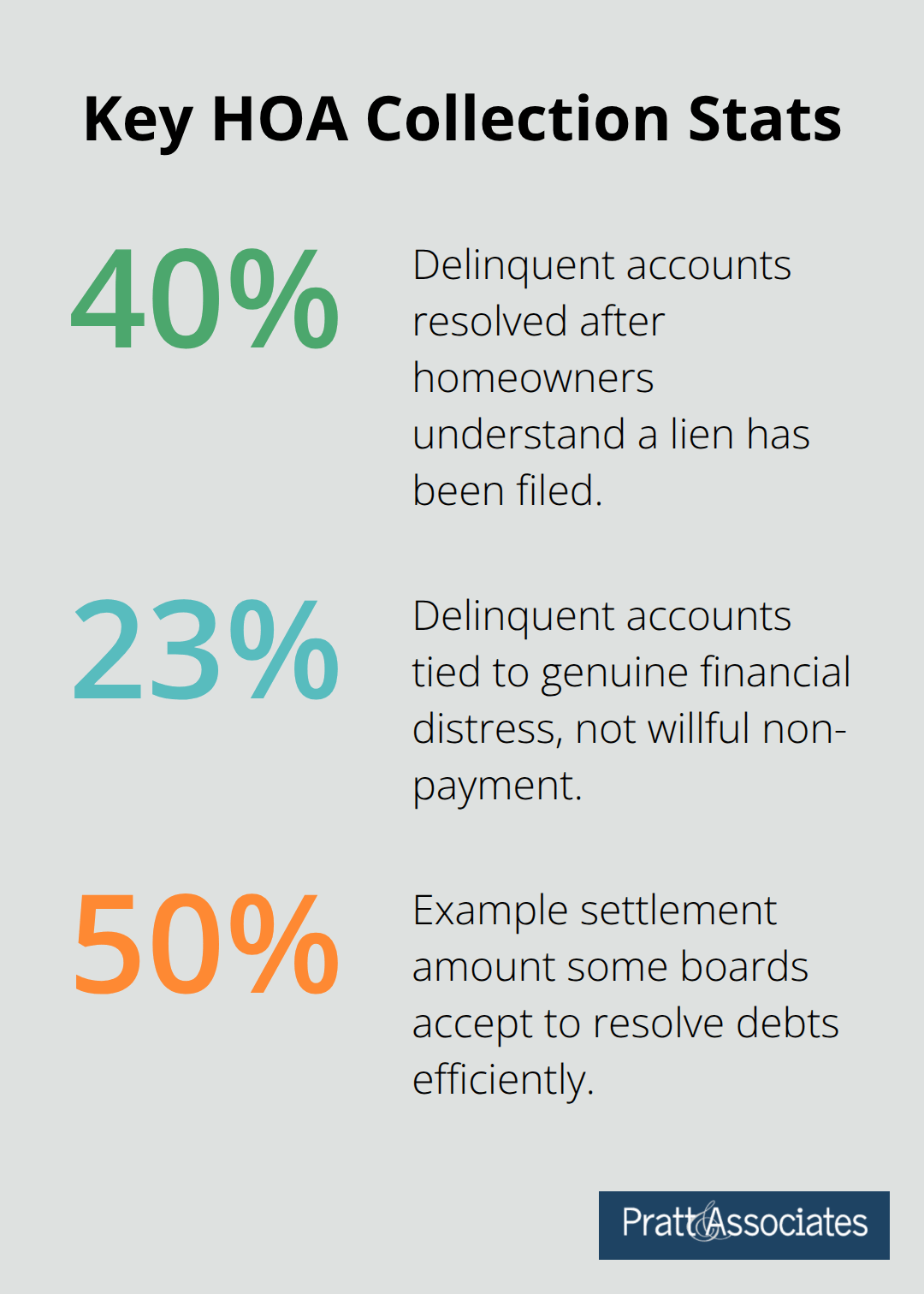
The harsh reality is that collecting a $3,000 delinquent assessment through foreclosure actually costs more than the debt itself, making the pursuit economically irrational. Boards must honestly evaluate whether enforcement spending makes sense given the amount owed, the likelihood of recovery, and the opportunity cost of diverting resources from community improvements and maintenance. Sometimes accepting a negotiated settlement for 50% of the owed amount proves far more sensible than spending $10,000 in legal fees to recover the full $3,000 debt.
Final Thoughts
HOA boards have three escalating legal tools for assessment collection: liens that attach to property titles, court judgments that can include wage garnishment, and foreclosure as a final resort. Each option carries different costs and timelines, ranging from $500 to $15,000 in legal fees. Liens resolve approximately 40% of delinquent accounts simply by creating financial pressure at the point of sale or refinance, making them the most cost-effective first step.
The step-by-step collection process matters more than jumping straight to aggressive tactics. Clear written payment demands, documented late fees and interest accumulation, and maintained communication channels resolve delinquencies faster than court judgments that consume six to eighteen months and thousands in attorney fees. Homeowners facing genuine financial hardship respond better to structured payment plans than to liens and foreclosure threats that generate legal expenses without actual recovery.
Real obstacles complicate every assessment collection effort-homeowners experiencing job loss or medical emergencies cannot pay regardless of legal pressure, disputes over assessment validity introduce legitimate legal questions that courts must resolve before enforcement can proceed, and enforcement costs frequently exceed the debt amount. When collection efforts stall or legal questions arise, contact Pratt & Associates in Los Gatos, California for guidance specific to your state’s regulations and your community’s circumstances.