

HOA disputes can escalate quickly, leaving homeowners frustrated and communities divided. The good news is that California law provides a structured path to resolution through mediation before costly litigation becomes necessary.
At Pratt & Associates, we’ve seen how the HOA mediation process in California helps residents and boards find common ground on everything from assessment disputes to architectural disagreements. This guide walks you through each step so you know exactly what to expect.
What Mediation Actually Means for HOA Disputes
Mediation vs. Other Dispute Resolution Methods
Mediation in the HOA context is a structured negotiation process where a neutral third party helps homeowners and boards communicate and reach agreements without going to court. Unlike arbitration, where a decision-maker imposes a binding outcome, mediation gives both sides control over the final result. California law strongly favors this approach because it resolves conflicts faster and at a fraction of the cost of litigation.
California’s Legal Requirements for HOA Mediation
California’s Davis-Stirling Common Interest Development Act, codified primarily in California Civil Code sections 4900-6876, requires many HOA disputes to go through mediation before litigation can proceed. Specifically, California Civil Code section 5900 mandates that disputes between homeowners and HOAs involving enforcement actions, architectural violations, and assessment disputes must be submitted to mediation first. This pre-litigation requirement exists because courts recognize that mediation resolves conflicts more efficiently than court proceedings. Data from the California Judicial Council shows that mediated disputes settle at rates between 70-80 percent, while court cases consume significant time and resources.
When Disputes Require Mediation
The necessity for mediation typically arises when informal communication breaks down. Homeowners who receive violation notices, face special assessments they believe are improper, or have unresolved disputes with neighbors should pursue mediation before filing a lawsuit. California law sets specific timelines for this process. Under Civil Code section 5905, the HOA must provide written notice of the dispute resolution process at least 30 days before initiating enforcement action against a homeowner. This notice requirement means you have a window to resolve issues without formal proceedings.
Why Mediation Works for Subjective Disputes
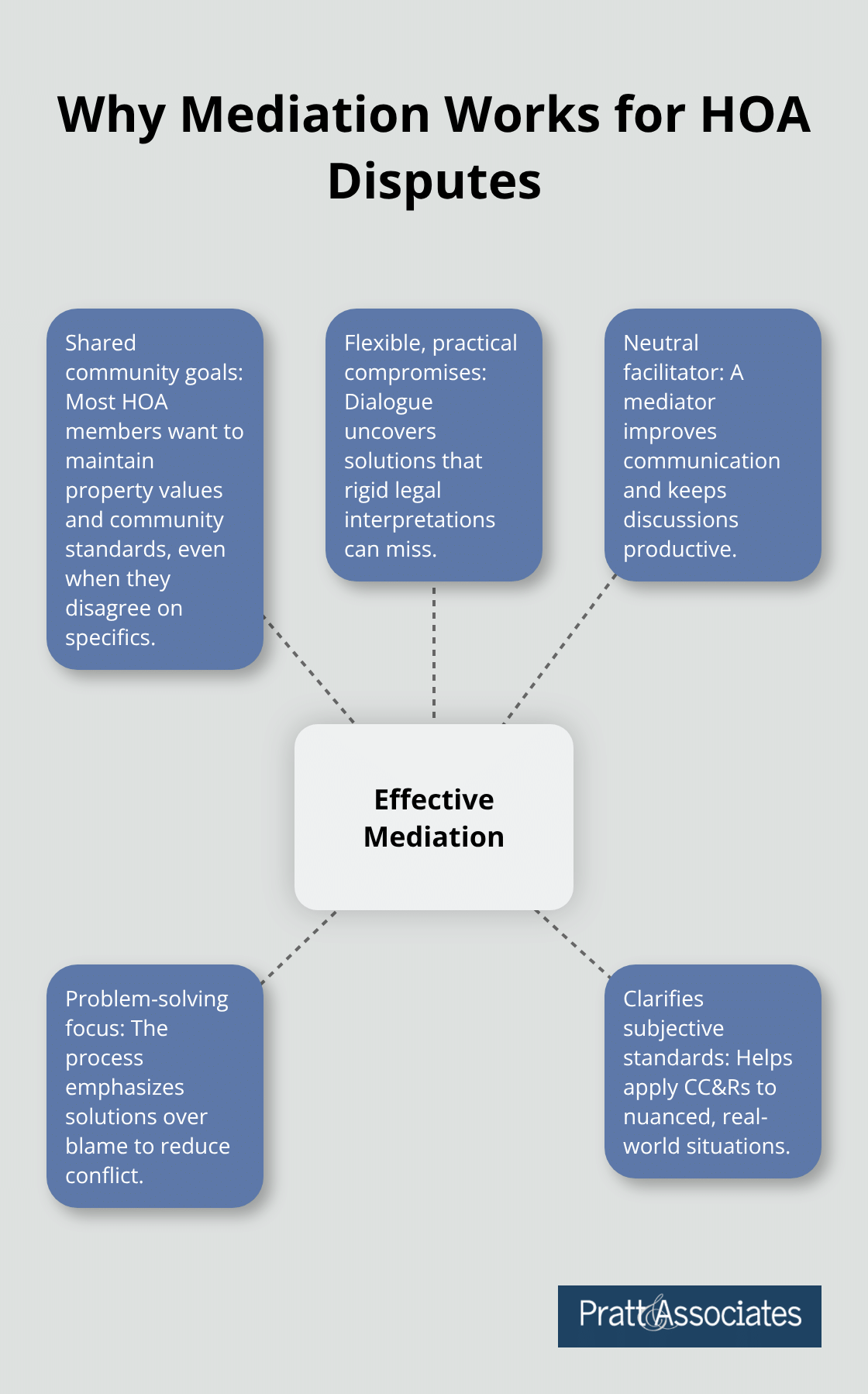
Mediation becomes particularly valuable when disputes involve subjective judgments, such as whether an architectural modification complies with CC&Rs or whether a homeowner’s conduct constitutes a nuisance. These situations benefit from dialogue because rigid legal interpretation often misses practical compromises. The state legislature recognized that most HOA members share common goals (maintaining property values and community standards) even when they disagree on specific issues. Mediation taps into this shared interest by focusing conversations on problem-solving rather than blame.
Cost Considerations and Next Steps
If you face an HOA dispute in California, initiating or responding to mediation promptly keeps your options open and typically costs between $500 and $2,500 total, compared to legal fees exceeding $10,000 for contested litigation. Understanding these mediation fundamentals positions you to navigate the formal process effectively. The actual mediation process involves specific steps and requirements that shape how disputes move toward resolution.
Moving Through Mediation: What Actually Happens
Understanding the 30-Day Timeline
The mediation process in California follows a structured timeline that protects both homeowners and HOAs. After you file a notice of dispute or respond to one, the clock starts immediately. California Civil Code section 5905 gives you 30 days from receiving written notice to attempt mediation before the HOA can proceed with enforcement action. This 30-day window is not negotiable, and missing it can limit your ability to challenge enforcement later.
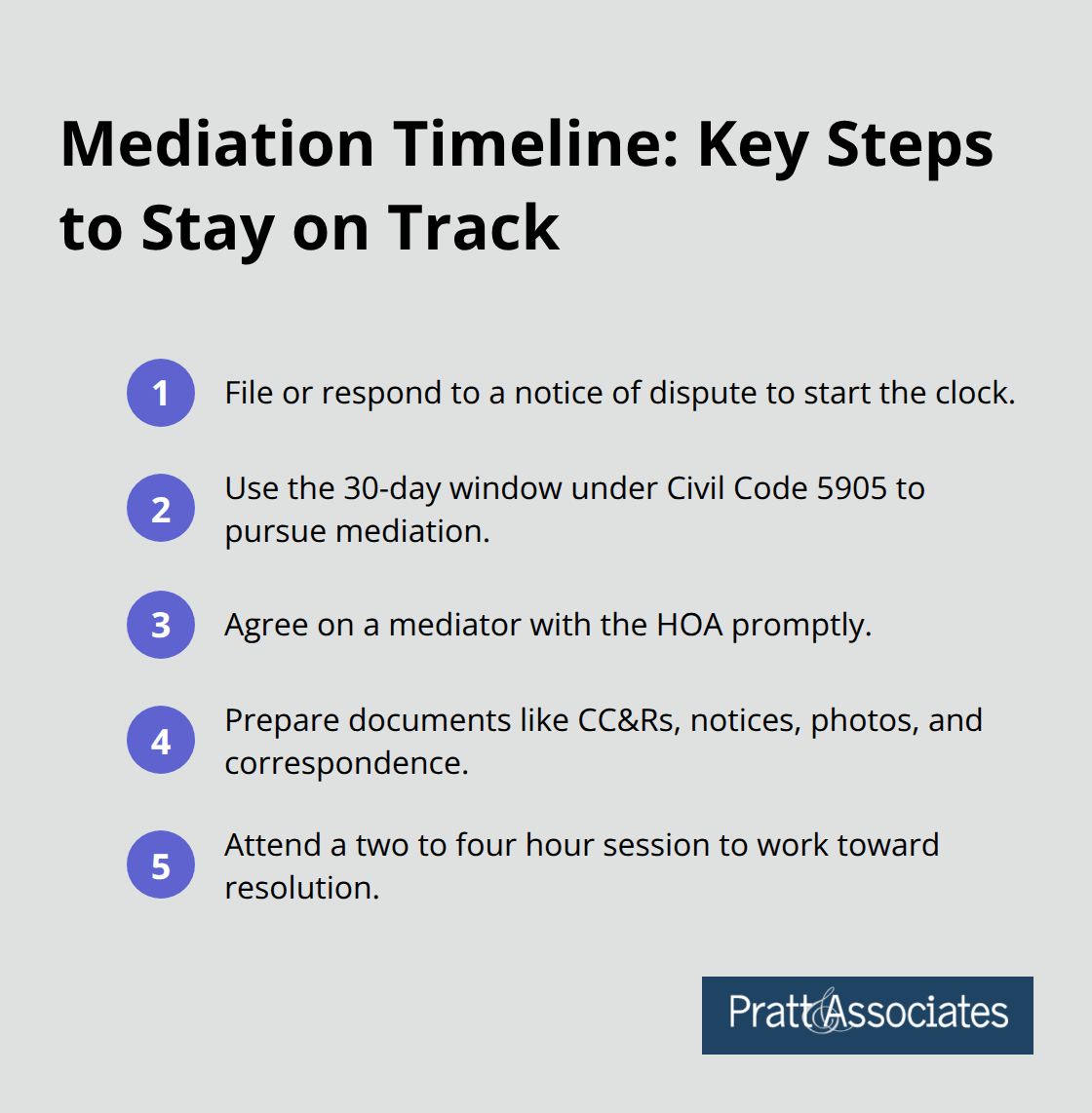
Within this period, both parties must agree on a mediator or request one through their local dispute resolution center.
Finding and Selecting Your Mediator
Most California counties maintain mediation programs specifically designed for HOA conflicts, and these services cost significantly less than private mediators. Orange County’s mediation program, for example, charges between $150 and $300 per party for a full mediation session, while private mediators typically range from $200 to $400 per hour. The HOA usually covers the mediator’s fee or splits it with the homeowner, depending on your community’s rules and the dispute type.
Selecting the right mediator matters more than most homeowners realize. You want someone trained specifically in California’s Davis-Stirling Act and HOA law, not a general mediator. Ask potential mediators about their experience with assessment disputes, architectural violations, and enforcement actions specifically.
What Happens During the Mediation Session
During the mediation session itself, expect a structured format where the mediator meets separately with each party first, then brings everyone together if productive dialogue seems possible. The session typically lasts two to four hours. Bring all relevant documentation: CC&Rs, violation notices, photographs, communications with the HOA, and any evidence supporting your position. The mediator will not make a decision for you, but they will identify common ground and pressure both sides toward compromise.
Outcomes and Your Next Steps
If mediation succeeds, you’ll sign a written settlement agreement that day or within days. This agreement becomes binding and enforceable in court, which means the HOA cannot pursue the same enforcement action afterward. If mediation fails, you retain the right to pursue litigation, though you’ll have satisfied California’s pre-litigation requirement and strengthened your case by documenting your good-faith efforts to resolve the dispute. Understanding what happens when mediation reaches an impasse-and when litigation becomes your path forward-requires knowledge of the specific disputes that most commonly land in mediation.
Common HOA Disputes That Mediation Resolves
Architectural Modification Conflicts
Architectural modification disputes represent the single largest category of HOA mediation cases in California. A homeowner wants to install solar panels, paint their exterior a non-approved color, or add a fence, and the HOA’s architectural committee rejects the request. These conflicts thrive in mediation because the CC&Rs often contain subjective language stating that modifications must be harmonious with community aesthetics. The mediator helps both sides understand what harmony actually means in practice. For instance, a homeowner might agree to a specific shade of paint or panel orientation that addresses the board’s legitimate concerns about property values, while the HOA recognizes the homeowner’s reasonable desire to upgrade their home. California courts have consistently held that architectural restrictions must apply reasonably, not capriciously, so mediation often surfaces compromises that satisfy this legal standard without requiring litigation.
Assessment and Fee Disputes
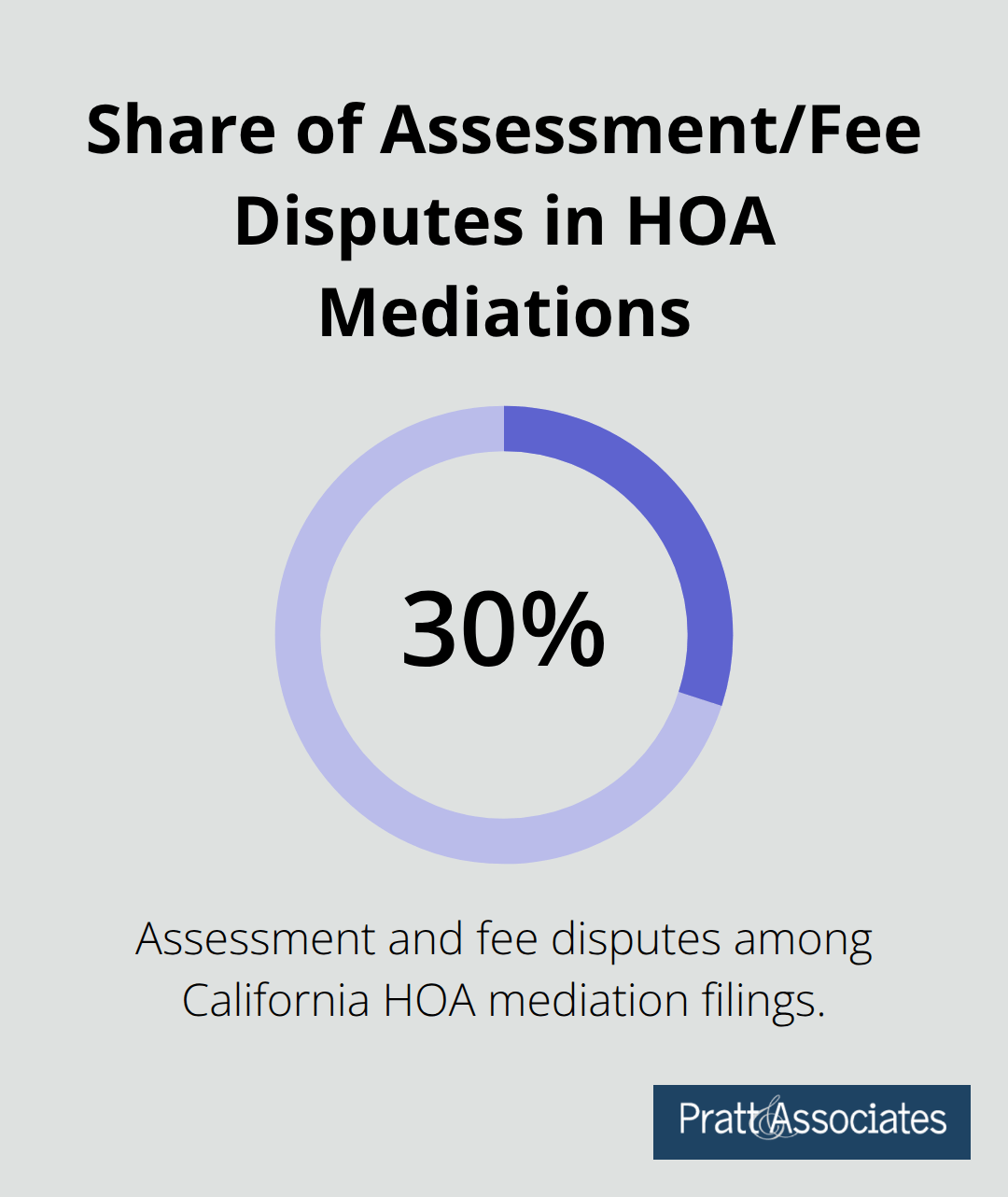
Assessment and fee disputes account for roughly 30 percent of HOA mediation filings according to data tracked by California’s Department of Consumer Affairs. Homeowners challenge special assessments for reserve funds, maintenance projects, or emergency repairs, claiming the amount is excessive or the process violated the law. Mediation works effectively here because the mediator can request the HOA produce documentation showing how they calculated the assessment, reserve study findings, and comparative data from similar communities.
A homeowner might discover the assessment is actually justified but negotiate a payment plan that eases their financial burden. Alternatively, the HOA might agree to reduce the assessment scope or phase the project over multiple years. These financial disputes rarely resolve through winner-take-all litigation, making mediation the practical choice.
Neighbor Conflicts and Nuisance Claims
Neighbor conflicts and alleged nuisance violations create particularly emotional mediation cases. One homeowner claims another’s dog barks constantly, children play too loudly, or a rental situation attracts problematic tenants. These disputes hinge on factual differences and competing lifestyle expectations rather than clear contract violations. A mediator facilitates conversations where neighbors actually hear each other’s concerns and establish practical boundaries (such as quiet hours or specific remedies for the barking issue). Without mediation, these disputes poison community relations and often result in both parties spending thousands on attorneys with minimal legal resolution.
Enforcement Action Disagreements
Enforcement action disagreements emerge when the HOA threatens to fine, place a lien, or initiate foreclosure against a homeowner for alleged violations. The homeowner claims they corrected the problem, received improper notice, or the violation claim itself is baseless. California law requires mediation before the HOA can proceed with most enforcement actions, giving homeowners a genuine opportunity to present evidence and challenge the HOA’s interpretation. During mediation, documentation often surfaces that changes the board’s position or reveals the homeowner actually did comply with requirements. Even when disagreement persists, mediation establishes a clear record of the dispute that strengthens either party’s position if litigation becomes necessary.
Final Thoughts
The HOA mediation process in California offers homeowners and boards a practical alternative to costly litigation. Most HOA conflicts stem from miscommunication rather than irreconcilable differences, and mediation creates space for that communication to happen before relationships deteriorate and legal costs spiral. The 70-80 percent settlement rate demonstrates that most parties find common ground when a neutral mediator facilitates dialogue.
Mediation works best when both parties approach it with genuine willingness to compromise, though some situations benefit from legal guidance alongside the process. If your dispute involves complex CC&R interpretation, potential lien placement, or foreclosure threats, an attorney can review your position and strengthen your negotiating stance. An attorney also protects your long-term interests by ensuring the settlement agreement complies with California law.
Whether you’re a homeowner facing an enforcement action or a board member seeking resolution with a resident, the structured approach outlined here gives you a roadmap for navigating the HOA mediation process in California. If your dispute involves complex legal questions or you need guidance on mediation strategy, Pratt & Associates in Los Gatos provides comprehensive legal services for real estate matters, including HOA disputes.