

HOA boards face constant pressure to comply with disclosure laws, yet many still get it wrong. Missing deadlines or leaving out critical information can expose your association to legal liability and member disputes.
We at Pratt & Associates help HOAs navigate these complex requirements. This guide breaks down HOA disclosure guidelines, common pitfalls, and practical steps to keep your board compliant.
What California and Federal Law Require HOAs to Disclose
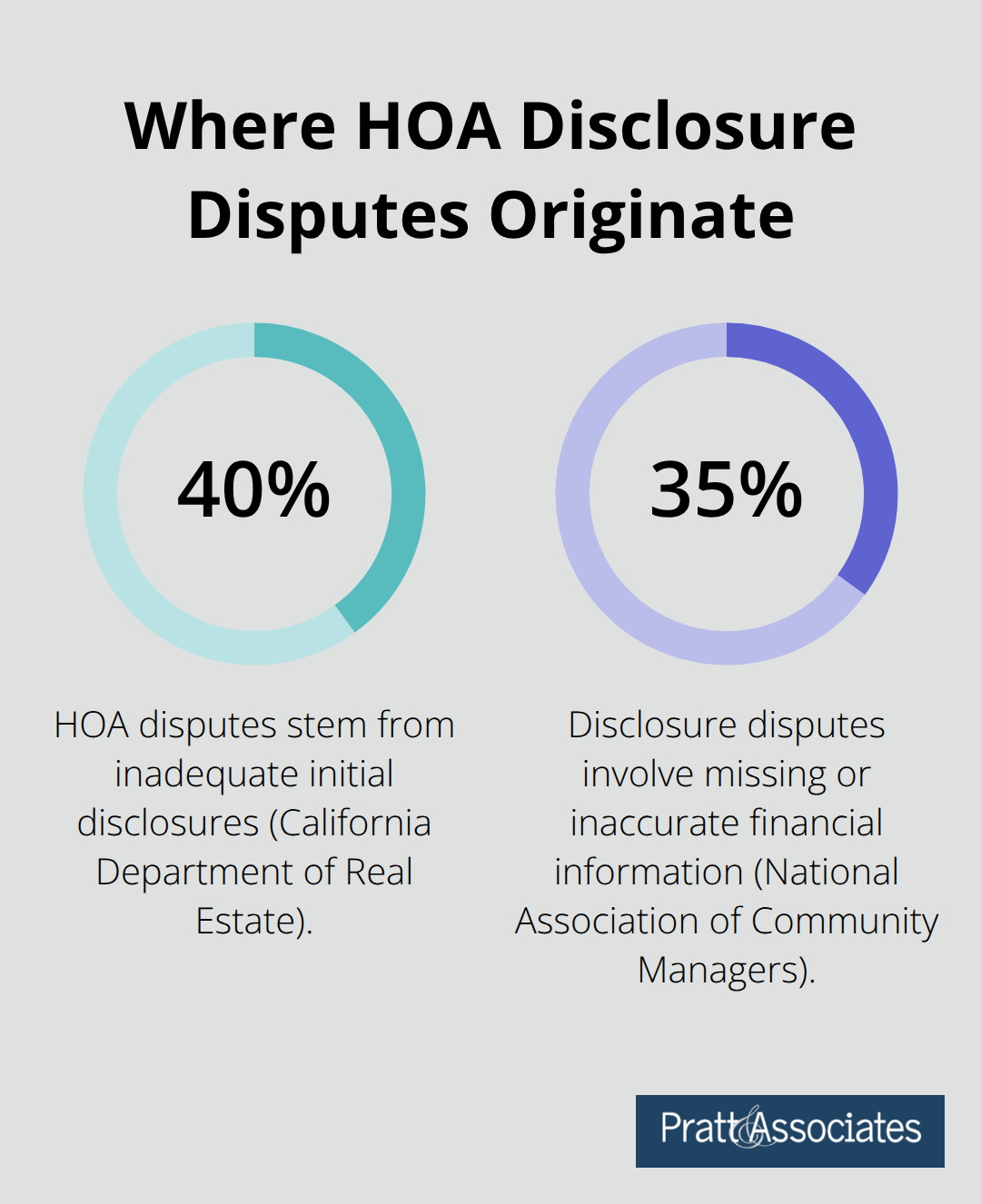
California Civil Code Section 1365.2 mandates that HOAs provide specific disclosures to buyers before they purchase a unit. Within 10 days of a purchase agreement, boards must deliver a copy of the governing documents, financial records from the past 12 months, a list of pending or threatened litigation, and information about any special assessments. The California Department of Real Estate reports that roughly 40% of HOA disputes stem from inadequate initial disclosures, making this requirement far from bureaucratic busy work.
Federal law layers additional requirements on top of state rules. The Telephone Consumer Protection Act restricts how HOAs contact members, the Fair Housing Act prohibits discrimination in disclosure practices, and the Americans with Disabilities Act requires accessible formats for documents. If your HOA operates in a community with federal flood insurance requirements, you must disclose that information too.
California’s Specific Disclosure Checklist
California law requires disclosure of resale certificates, reserve study summaries, and any restrictions on architectural modifications. Boards often underestimate how detailed the financial documentation must be, including operating budgets, reserve funding analyses, and information about any delinquent assessments.
The most common mistake is providing incomplete reserve studies or omitting information about pending litigation, even minor disputes. Boards frequently get caught off guard by requirements to disclose pending lawsuits against the association or enforcement actions the board has taken against members.
Timing and Delivery Matter
Delays in providing documents give buyers grounds to rescind their purchase, and California courts have consistently ruled against boards that miss the 10-day window. Delivery requirements specify that documents can be sent electronically, but boards must confirm receipt and maintain proof of delivery for at least five years.
Federal Compliance Beyond California
Beyond state requirements, HOAs must comply with federal accessibility standards when providing disclosures. Documents must be available in large print or digital formats upon request (the Fair Housing Act prohibits conditioning disclosure on a buyer’s protected status, yet some boards inadvertently violate this by selectively withholding information).
Your delivery method also matters federally-electronic delivery is acceptable, but only if the recipient can actually access it. These overlapping state and federal requirements create complexity that boards cannot ignore, which is why understanding common disclosure mistakes becomes your next priority.
Where HOA Boards Stumble on Disclosure Obligations
Financial Records: The Most Common Failure Point
Financial records are where most boards fail spectacularly. California law requires HOAs to provide reserve study summaries, operating budgets, and documentation of any delinquent assessments, yet boards routinely submit incomplete or outdated financial statements to prospective buyers. The problem isn’t ignorance-it’s the assumption that last year’s budget still applies or that a summary of reserves suffices when full documentation is legally mandated. When a buyer discovers that the reserve fund is significantly underfunded or that special assessments are pending, boards face rescission demands and litigation.
The National Association of Community Managers found that nearly 35% of disclosure disputes involve missing or inaccurate financial information, making this the single largest liability exposure for most associations. Boards must pull complete financial records from the past 12 months, including bank statements, expense reports, and any correspondence about unpaid assessments or collection actions against members. Incomplete financial documentation exposes your association to legal claims that could have been prevented with proper record management.
Litigation and Defect Disclosure: Where Silence Backfires
Litigation and defect disclosure represents the second major failure point, and it’s where boards get dangerously creative with silence. California law requires disclosure of any pending or threatened litigation, including enforcement actions against individual members, disputes with contractors, or structural defects discovered during inspections. Many boards convince themselves that minor disputes don’t count or that withholding information about known roof leaks or foundation issues protects property values-it does the opposite.
Courts consistently rule that non-disclosure of known defects gives buyers the right to rescind, and some have awarded damages exceeding $100,000 when boards concealed significant structural problems. Architectural review denials also generate disclosure obligations that boards often overlook. If the board has rejected architectural modification requests, denied variance applications, or enforced design restrictions against specific members, that history must be disclosed to prospective buyers because it directly impacts their ability to modify their units.
Supplemental Disclosures: An Overlooked Obligation
Boards treat disclosure as a one-time event rather than an ongoing obligation, and this mistake creates serious legal exposure. When litigation arises after initial disclosure or new defects emerge, boards must provide supplemental disclosures to pending buyers within a specified timeframe, yet many associations ignore this requirement entirely. This ongoing obligation means your board cannot simply hand over documents at closing and consider the matter resolved-you must monitor for changes and act quickly when circumstances shift.
How to Build a Disclosure System That Actually Works
Boards that treat disclosure as a one-time checklist inevitably miss updates, lose documents, or fail to communicate changes to the right people. Most associations create disclosure packets, hand them over to buyers, and assume the job is finished. The reality is that disclosure obligations are continuous. Your board needs systems that catch new litigation, track document changes, and remind you when supplemental disclosures become necessary. Without structured processes, even well-intentioned boards slip into non-compliance within months.
Create a Master Document Inventory
Start with a spreadsheet that lists every document required by California Civil Code Section 1365.2 and federal law, along with the date it was created, when it was last updated, and who maintains it. Include reserve studies, operating budgets, financial statements, litigation status, architectural review decisions, special assessment notices, and accessibility documentation. Assign specific board members or management company staff to own each category. The spreadsheet should flag documents older than 12 months automatically, since California requires current financial records. Many associations fail disclosure deadlines simply because they cannot locate documents quickly enough to meet the 10-day delivery window. A simple spreadsheet prevents this entirely.
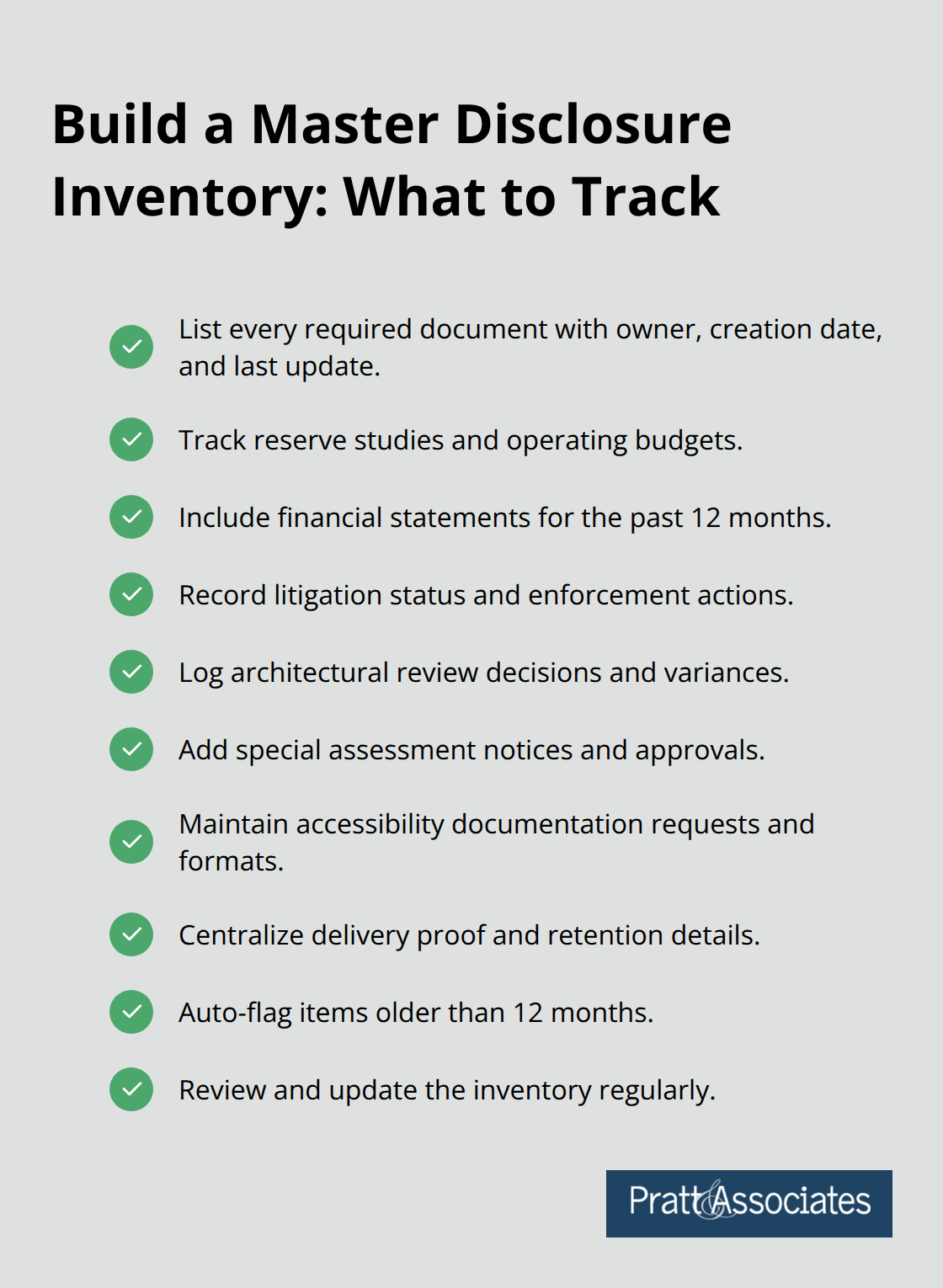
Add a column for supplemental disclosure triggers-when litigation is filed, when new defects surface, when special assessments are approved, your system should immediately flag that a supplemental disclosure is due. This transforms disclosure from reactive to proactive. Your inventory becomes the foundation that prevents missed obligations.
Implement Delivery Protocols With Proof
Board members and property managers must understand that delivery proof is as important as the documents themselves. California courts have ruled against associations that could not demonstrate they delivered disclosures within the required timeframe. Use a delivery method that generates automatic confirmation (email with read receipts, certified mail with tracking, or a digital platform that timestamps when buyers accessed documents). Keep records of every delivery for at least five years, including the date sent, recipient name, delivery method, and confirmation of receipt.
This documentation protects your association if a buyer later claims they never received required information. Many associations lose litigation because they cannot prove timely delivery, not because the documents were inadequate. Establish a single point of contact who manages all disclosure delivery and maintains a master log. This prevents confusion about who sent what and when. If your HOA uses a management company, verify in writing that they understand these retention requirements and have systems to track delivery proof.
Recognize Disclosure Triggers Throughout the Year
Board members must know that disclosure obligations extend beyond the initial sale. When the board receives notice of pending litigation, discovers structural defects during inspections, approves special assessments, or makes enforcement decisions, these events trigger supplemental disclosure requirements for any pending sales.
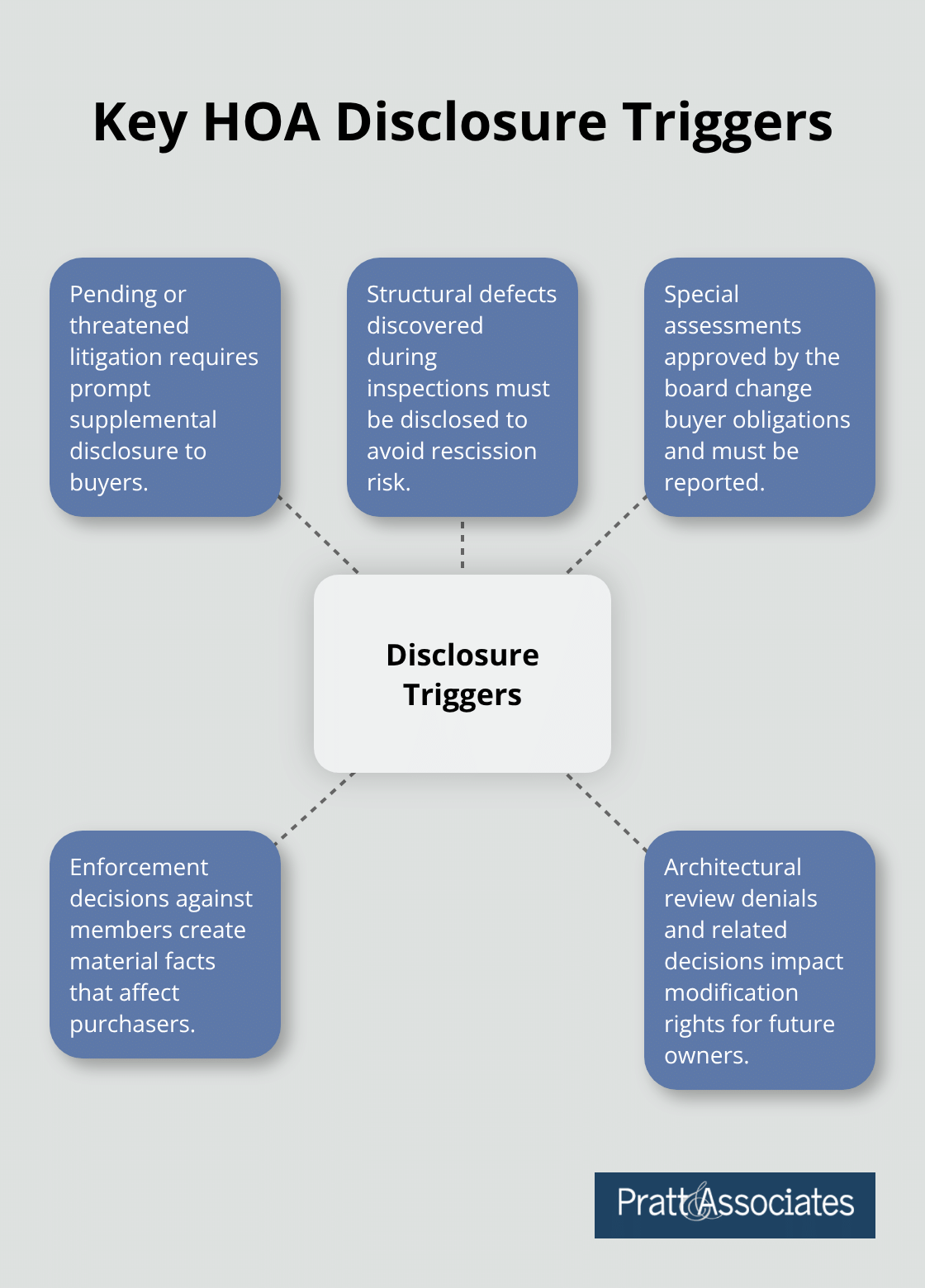
Many boards assume litigation is confidential and should not be disclosed-this assumption is dangerously wrong. California law requires disclosure of any pending or threatened litigation against the association, regardless of sensitivity.
Similarly, when architectural review decisions are made, those decisions create a history that affects future buyers’ ability to modify their units. Train your board to ask one question whenever circumstances change: Does this information affect a buyer’s decision to purchase? If yes, disclose it. This simple test catches most disclosure obligations that boards otherwise overlook. Hold quarterly board meetings specifically to review whether any new disclosure triggers have occurred since the last meeting. This regular cadence keeps disclosure obligations visible and prevents them from slipping through the cracks.
Final Thoughts
HOA disclosure obligations are not optional compliance tasks that boards can postpone or minimize. California Civil Code Section 1365.2 and federal law create specific, enforceable requirements that directly impact your association’s legal standing and financial exposure. Boards that treat disclosure as a one-time event rather than an ongoing system inevitably face rescission demands, litigation, and member disputes that could have been prevented with proper planning.
Buyers deserve complete, accurate information about the financial condition, legal status, and operational history of the association they are joining. When boards provide comprehensive financial records, disclose pending litigation, reveal known defects, and document architectural review decisions, they eliminate the primary grounds for post-purchase disputes. The National Association of Community Managers data showing that 35% of disclosure disputes involve missing financial information demonstrates that this is not theoretical risk-it is the leading cause of HOA litigation today.
Implementing the systems outlined in this guide transforms HOA disclosure guidelines from a source of anxiety into a manageable process. A master document inventory, delivery protocols with proof of receipt, and quarterly reviews of disclosure triggers keep your board compliant without requiring extensive time or resources. If your board lacks confidence in its disclosure practices or faces questions about compliance, Pratt & Associates in Los Gatos can provide the guidance needed to strengthen your systems and address specific concerns.