
Most homeowners don’t realize they have real power over their HOA’s finances. In Santa Clara County, state law gives you the right to review budgets, question expenses, and push back on assessments that don’t add up.
At Pratt & Associates, we’ve seen homeowners win budget disputes simply because they knew what to look for and how to act. Budget transparency isn’t a courtesy-it’s your legal right, and this guide shows you how to exercise it.
What Actually Goes Into Your HOA Budget
Santa Clara County HOAs must follow California Civil Code Section 1365, which requires detailed budget disclosures. Most homeowners never read past the cover page, but that’s where the real problems hide. Annual budgets typically break down into three main spending categories: operating expenses, reserve contributions, and special assessments. Operating costs cover day-to-day maintenance like landscaping, utilities, and insurance for common areas. Reserve funds sit aside for future repairs, and this is where we see the most aggressive overcharging.
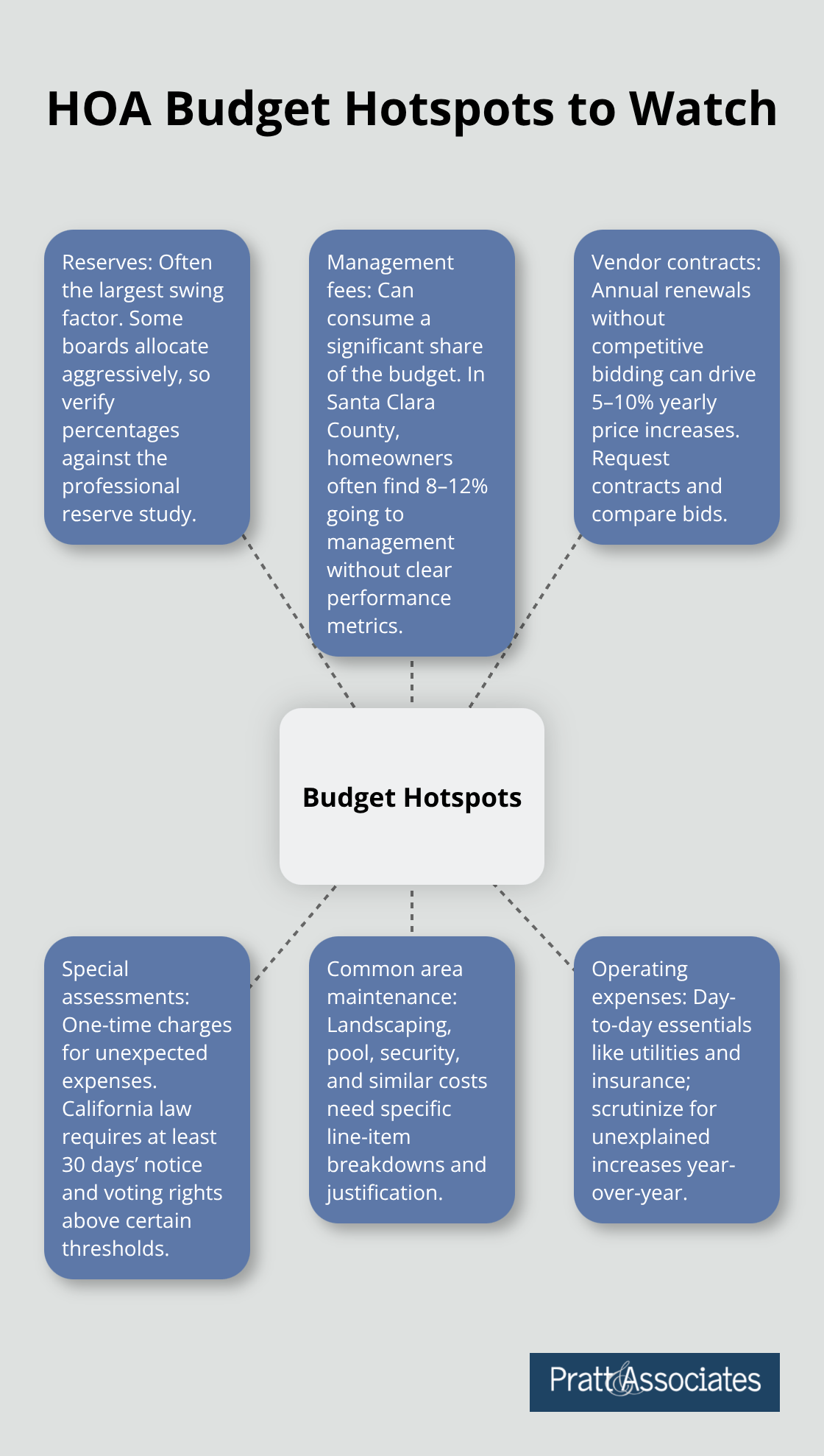
Santa Clara County HOAs contributed an average of 15-20% of budgets to reserves between 2023 and 2025, according to Community Associations Institute data. Some HOAs push reserves to 25-30%, claiming future roof replacements or parking lot resurfacing justify the increase.
Reserve Funds Are Where Disputes Start
Reserve calculations should follow a funded percentage method based on professional engineering studies. Your HOA must commission these studies every three years under California law. If your HOA hasn’t updated its reserve study recently, that’s your first red flag. Many Santa Clara County associations use outdated assessments to justify inflated reserve percentages. Request the actual reserve study document and compare it to your budget allocation. If your HOA claims 20% reserves but the study recommends only 10%, that discrepancy costs you real money. Special assessments operate differently from reserves-they’re one-time charges for unexpected expenses. California law requires HOAs to provide at least 30 days’ notice before implementing a special assessment, and you have the right to request a vote on assessments over a certain threshold.
Common Area Maintenance Reveals Hidden Costs
Operating budgets for common area maintenance often contain line items that lack justification. Landscaping, pool maintenance, security patrols, and management company fees should each have specific cost breakdowns. Request vendor contracts and competitive bids to verify your HOA actually shopped around for services. Many associations renew contracts annually without bidding, allowing vendors to raise prices 5-10% yearly. Santa Clara County homeowners frequently find that management company fees consume 8-12% of total budgets, sometimes without clear performance metrics. Ask your HOA board whether they conduct annual rate reviews or accept whatever price increases vendors propose. Documentation showing unused reserve balances while the HOA simultaneously raises assessments indicates financial mismanagement worth challenging.
These budget components form the foundation of what you’ll review and question. Understanding where your money actually goes prepares you to spot irregularities and take action when numbers don’t align with your HOA’s stated needs.
Your Rights to Review and Question the Budget
California Law Protects Your Access to Budget Documents
California Civil Code Section 1365 mandates that HOAs provide budget documents to homeowners at least 30 days before the annual meeting where the budget gets approved. In Santa Clara County, this creates a legal window for you to request and review materials before any vote occurs. Most homeowners miss this deadline because they don’t know it exists. The law requires HOAs to give you the proposed budget, a summary of reserves, and a statement showing how much of your assessment goes toward reserves versus operations. You can request these documents in writing, and the HOA must respond within five business days. Don’t accept vague responses or incomplete documents-push back if your board claims materials aren’t ready.
What Documents You Can Actually Demand
Your right to access extends beyond just the budget itself. You can request the reserve study that justifies your HOA’s reserve funding percentage, vendor contracts for major services, meeting minutes discussing budget decisions, and comparative bids showing whether your HOA actually competed for services. Santa Clara County homeowners frequently discover that management companies have held contracts for five or more years without competitive bidding, resulting in inflated fees that could have been negotiated lower.
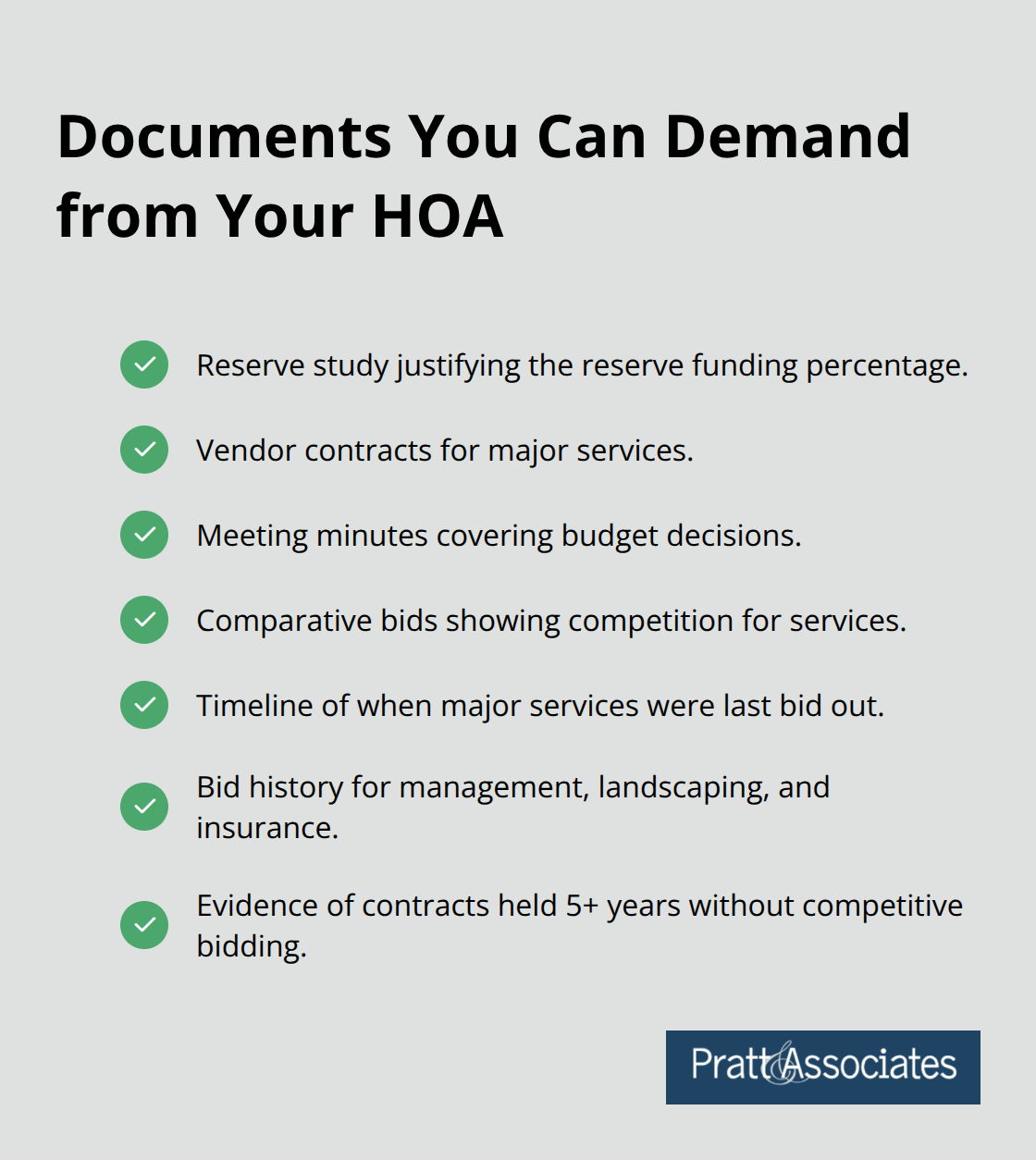
Request a timeline showing when your HOA last bid out management services, landscaping, and insurance-if these haven’t been competitively bid in the last two or three years, that’s a legitimate basis for challenging budget increases.
Speaking Up at Budget Meetings
You have the right to attend the budget meeting and speak before any vote happens. State law requires HOAs to allow reasonable time for homeowner comments, though boards can limit each speaker to three to five minutes depending on the HOA’s bylaws. Come prepared with specific questions about line items that don’t make sense, not general complaints about cost increases. Boards take written objections more seriously than verbal ones, so submit your concerns in writing before and after the meeting. This creates a documented record that strengthens your position if you later pursue a formal challenge.
Building Your Case Before the Meeting
The 30-day review window gives you time to gather evidence and organize your objections. Compare the proposed budget against previous years’ budgets to spot unusual increases in specific categories. Look for management fees that rise annually without explanation or reserve contributions that exceed what the reserve study recommends. If you spot discrepancies between what the HOA claims it will spend and what vendor contracts actually state, document those differences. Prepare a written summary of your concerns with specific dollar amounts and line items-vague objections carry little weight with boards. When you submit your written objection, reference the California Civil Code sections that support your position and request a written response from the board explaining their budget decisions.
Once you’ve gathered evidence and submitted your objections, you’re ready to move from questioning the budget to formally challenging it.
How to Build and Present a Winning Challenge
Gather Concrete Evidence First
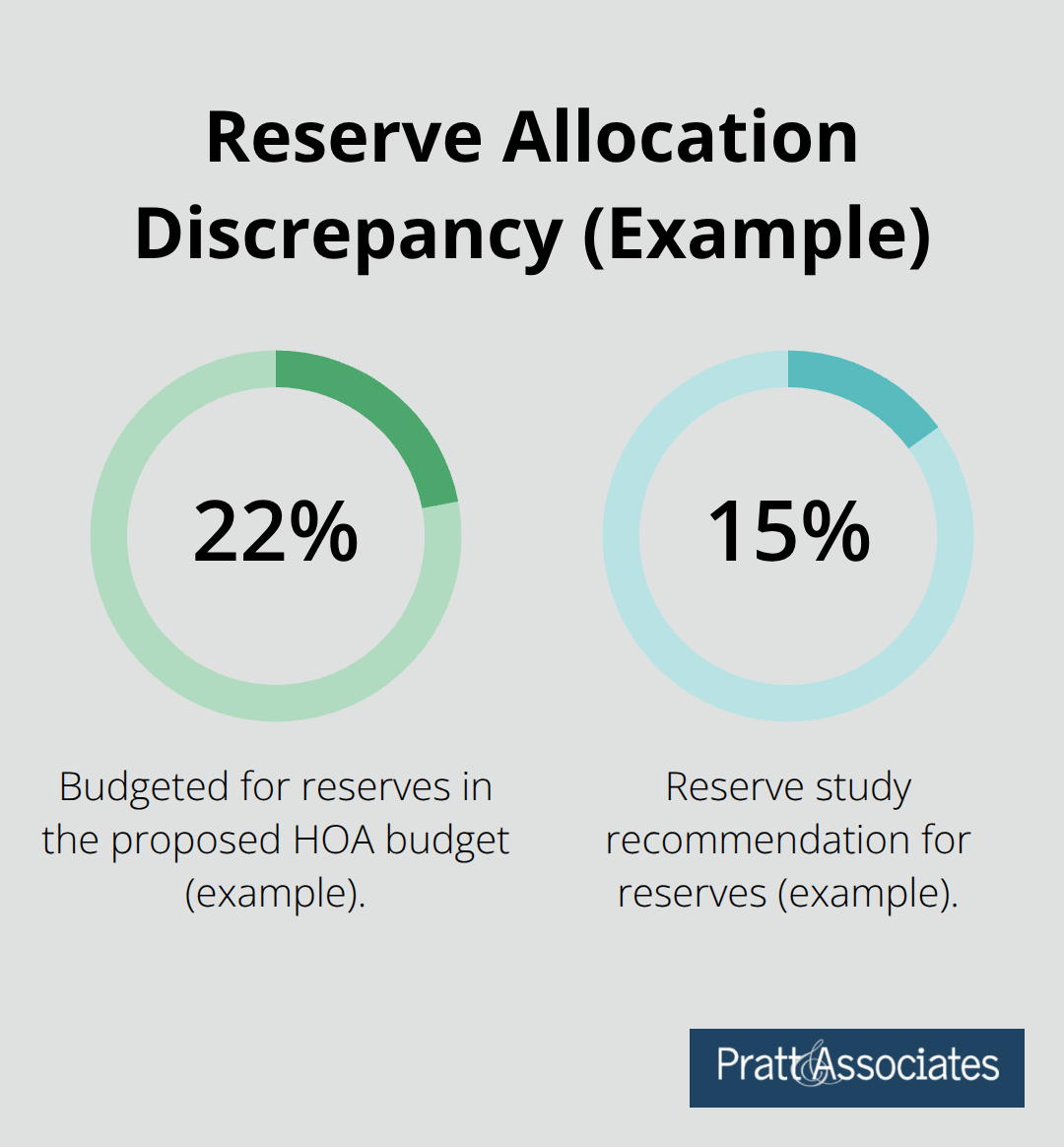
Concrete evidence separates successful budget challenges from complaints that boards dismiss outright. Start by obtaining the actual vendor contracts your HOA signed, not just the line items in the budget. Many Santa Clara County homeowners discover their management company charges significantly more than the regional average of 6-8% of total budgets when they finally see the contract terms. Request the past three years of board meeting minutes where budget or vendor decisions were discussed, then cross-reference what was promised against what actually appears in the current budget. Look for patterns like landscaping costs that increase 8-10% annually without documented reasons or reserve contributions that don’t match the reserve study percentages. Calculate the dollar impact of these discrepancies so you can present specific numbers rather than general concerns. If your HOA budgeted 22% for reserves but the reserve study recommends 15%, that’s a measurable problem worth quantifying. Document any instances where your HOA held cash reserves above the funded percentage while still raising assessments, which indicates the board collected more than necessary.
Take screenshots or print copies of all documentation you gather, organize it chronologically, and create a simple spreadsheet showing budget items alongside supporting evidence that contradicts or questions them.
Structure Your Written Objection Professionally
Your written objection should read like a professional complaint, not an angry letter. Address it to the board in writing at least five business days before the budget vote, then submit a copy to the management company as well. Structure your objection with an introduction stating you oppose the budget and why, followed by specific line-item challenges with supporting documentation attached. For each disputed expense, state the budgeted amount, explain why you believe it’s excessive or unjustified, and reference the evidence you’ve gathered. When the board votes despite your objection, request that your written challenge be entered into the meeting minutes, creating a permanent record. California law doesn’t require HOAs to modify budgets based on homeowner objections, but documented opposition protects you if you later pursue mediation or litigation.
Present Your Case at the Budget Meeting
Attend the budget meeting prepared to speak for the full time allowed, focusing on your three strongest objections rather than listing every concern. Boards take written objections more seriously than verbal ones, so your in-person remarks should reinforce what you’ve already submitted in writing. After the vote, follow up with written questions asking how the board responded to your specific challenges. This creates additional documentation showing the board either ignored legitimate concerns or failed to justify their spending decisions. If multiple homeowners submit written objections on the same issues, boards take notice because it signals organized resistance rather than individual complaints. Play by the rules throughout your challenge process to maintain credibility and strengthen your position if escalation becomes necessary.
Final Thoughts
Budget challenges make sense when your HOA’s numbers don’t align with documented costs or when reserve contributions exceed what professional studies recommend. If you’ve gathered evidence showing management fees that haven’t faced competitive bidding in years, reserve percentages that contradict the reserve study, or operating expenses that lack justification, you hold legitimate grounds to push back. Santa Clara County homeowners who challenge budgets often find boards become more transparent about spending decisions once they realize someone is actually paying attention to budget transparency.
Some budget disputes involve complex financial calculations, outdated reserve studies, or board resistance that requires more than written objections and meeting attendance. When your HOA dismisses your concerns or refuses to provide documentation you’re legally entitled to access, that’s the point where legal counsel becomes necessary. We at Pratt & Associates handle real estate disputes including HOA conflicts, and we can review your specific situation to determine whether your challenge has merit and what steps make sense next.
Start with the steps outlined here: request documents, analyze the numbers, submit written objections, and attend meetings prepared to speak. If the board ignores legitimate concerns or continues practices that contradict California law, contact Pratt & Associates to discuss your options. Your right to question HOA finances is real, and taking action protects both your wallet and your community’s financial health.