
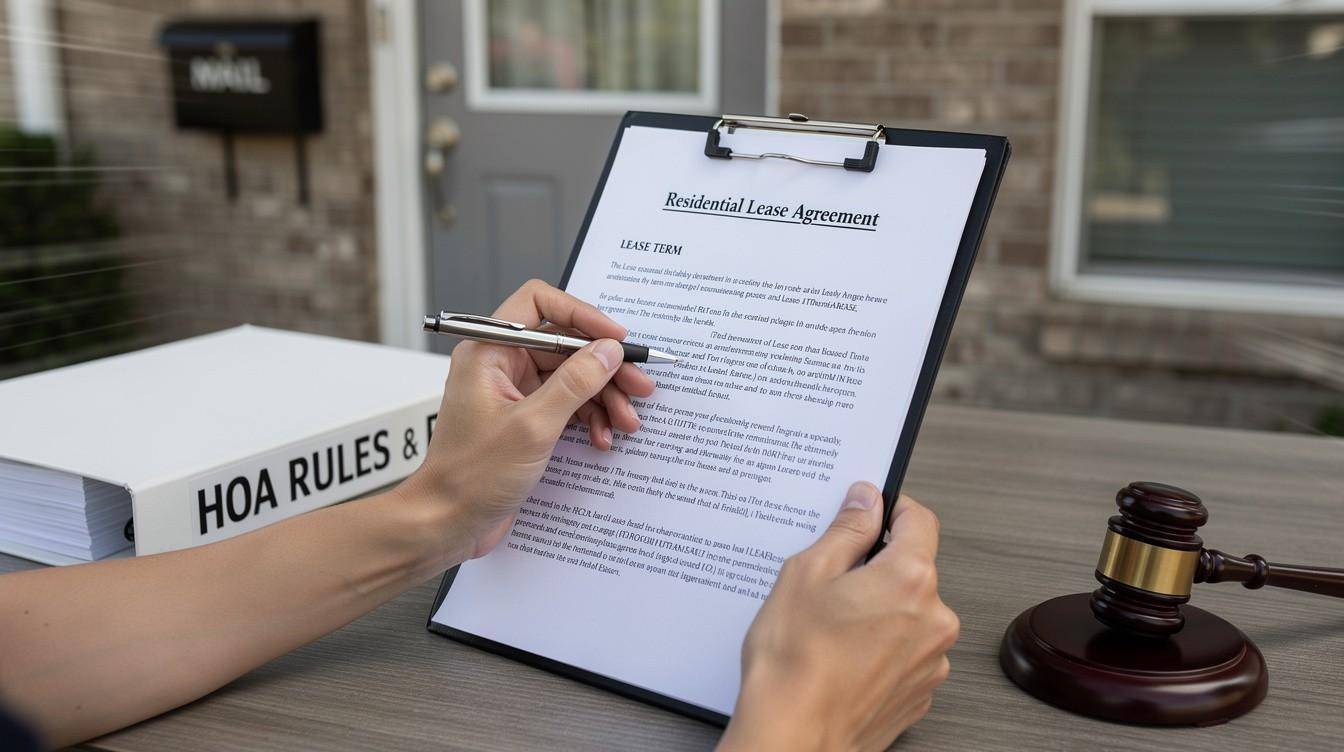
Many HOA boards in Santa Clara County adopt rental lease restrictions without realizing they may violate California law or lack proper enforceability. We at Pratt & Associates have seen boards struggle when their rental policies clash with tenant rights or fail to meet state requirements.
The difference between a rule that sticks and one that falls apart in court often comes down to how it was adopted, documented, and applied. This guide walks you through what makes rental restrictions actually enforceable and where most boards go wrong.
What Makes Rental Rules Actually Enforceable in Santa Clara County
Three Foundational Elements
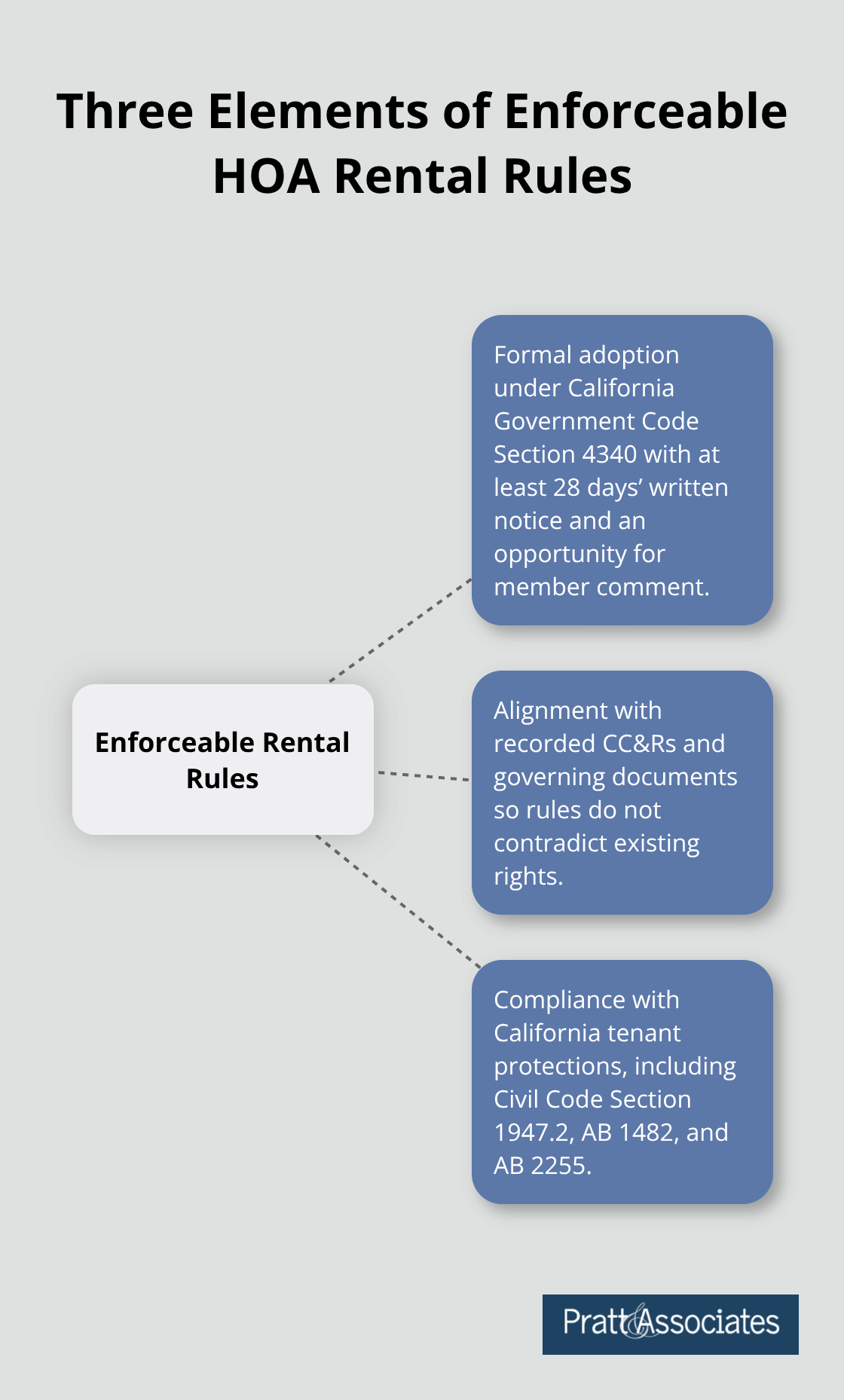
Valid rental restrictions in Santa Clara County rest on three foundational elements that must work together. First, your HOA must follow California Government Code Section 4340, which requires that any rule affecting member rights be adopted through a formal process with proper notice and an opportunity for members to be heard. Your board cannot vote on a rental restriction in a closed session and expect it to hold up. You must provide members with written notice at least 28 days before the meeting where you discuss the rule, and you must allow them to speak during that meeting.
Second, your rental rules must align with your CC&Rs and governing documents. If your CC&Rs permit owners to rent their units without restriction, a board rule banning rentals will fail. California courts consistently void HOA rules that contradict the recorded CC&Rs, so review what your documents actually permit before adopting any rental restriction.
Third, your rules cannot conflict with California’s tenant protection laws. The state has strengthened tenant rights significantly in recent years, particularly around lease duration, security deposit limits, and eviction protections. California Civil Code Section 1947.2 limits the terms HOAs can impose on lease agreements, and AB 2255 restricts certain rental restrictions based on tenant familial status. Many boards in the area learned this lesson when they tried enforcing rules that violated these protections and faced litigation they could not win.
Documentation Requirements
Documentation is where most boards fail. You need written records showing that your board voted to adopt the rule, when notice was given, who attended the meeting, and what feedback members provided. Without these records, you cannot prove the rule was properly adopted, and a member challenging it in court will likely succeed.
Your rental policy should include a clear statement explaining which specific CC&R provisions or California laws authorize the restriction. If your HOA restricts rental periods to a minimum lease of six months, document why that term is necessary for your community’s stability and property values. Courts expect HOAs to have rational reasons for their restrictions, not arbitrary ones.
The Difference Between Defensible and Indefensible Rules
A rule that states owners cannot rent for less than six months because your community’s turnover costs and management expenses are significant is defensible. A rule that simply prohibits short-term rentals with no documented justification is not. The distinction matters in court.
If your rules predate 2020, they likely need updating. Many boards adopted rental restrictions years ago without considering how California law has evolved. The next section examines the specific enforceability issues that commonly arise when boards fail to align their policies with current state requirements and their own governing documents.
Common Enforceability Issues with HOA Rental Restrictions in Santa Clara County
Overly Restrictive Lease Terms That Violate Tenant Rights
Most Santa Clara County HOAs discover their rental restrictions are unenforceable only when a member challenges them or a court case forces a review. The problem often stems not from the rules themselves but from how they interact with California’s evolving tenant protections. AB 1482, passed in 2019, established baseline tenant protections that override many HOA restrictions, including limits on security deposits, mandatory lease renewal rights in certain circumstances, and protections against arbitrary evictions. If your HOA rules require lease terms that conflict with AB 1482 provisions, those rules will not survive legal challenge.
Many boards impose minimum lease lengths of one or two years without realizing that California courts have questioned whether such restrictions are reasonable limitations on property rights or unlawful restraints on alienation. A six-month minimum lease is far more defensible than a two-year minimum, and boards that cannot articulate a specific community need for the longer term often lose in litigation. California Civil Code Section 1947.2 restricts lease terms HOAs can impose, and many boards still enforce restrictions adopted before this statute was widely understood.
Inconsistent Application Across the Community
Inconsistent enforcement creates a critical vulnerability that courts view seriously. If your board allows one owner to rent short-term while denying the same right to another owner, you have created a pattern that undermines the rule’s enforceability. California courts apply the business judgment rule to HOA decisions, but that protection evaporates when the board applies rules arbitrarily.
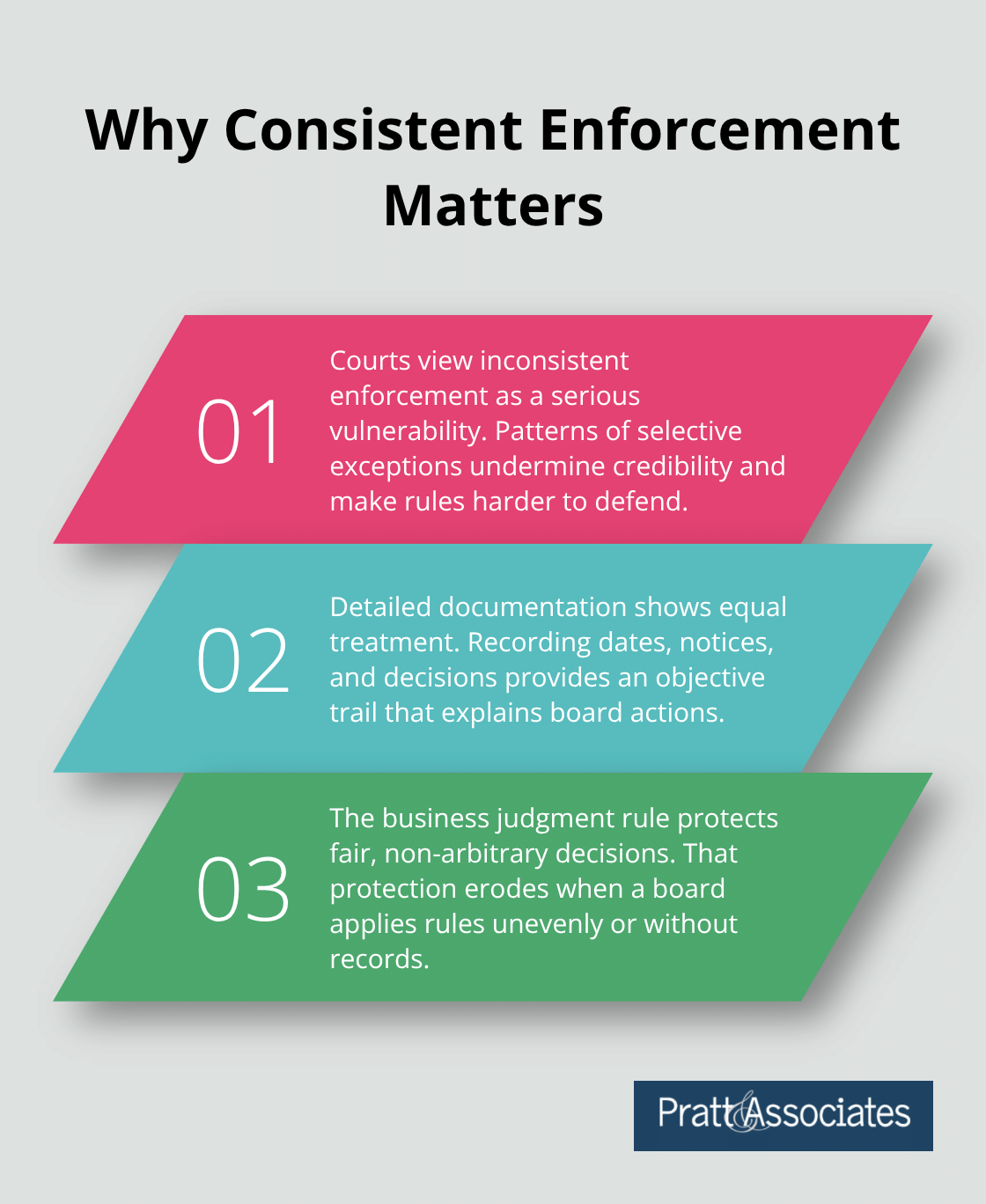
Documentation of every enforcement action becomes essential. Record dates, notices sent, and decisions made for each violation. Without this documentation, you cannot defend why the rule applies to some owners but not others. Selective enforcement patterns that went unnoticed five years ago now create documented evidence that undermines the board’s credibility in any dispute.
Conflicts Between HOA Rules and California Rental Law
Fair Employment and Housing Act protections now extend to familial status discrimination, meaning HOA rental rules cannot effectively prohibit families with children from renting or impose different lease terms based on household composition. Several Santa Clara County HOAs have faced complaints to the Department of Fair Employment and Housing for rental restrictions that appeared neutral on paper but functioned as familial status discrimination in practice.
These complaints created liability exposure and forced policy revisions. Additionally, many boards adopted rental restrictions years ago without considering how California law has evolved since 2020. Rules that seemed reasonable in 2015 may violate current law in 2026. The gap between outdated policies and current legal requirements grows wider each year, leaving boards vulnerable to challenges they cannot win.
The reality is that HOA boards in Santa Clara County must treat rental policy enforcement as a legal function, not an administrative task. This shift in perspective requires boards to understand not just what their rules say but whether those rules align with current California statutes and case law. The next section examines how boards can strengthen their rental policies through legal review and updated procedures.
How to Strengthen Your HOA’s Rental Policy in Santa Clara County
Conduct a Complete Legal Audit of Your Current Rules
Start with a full legal audit of your current rental rules. Pull your adopted policies, review when each was voted on, and check whether the board maintained documentation showing proper notice and member approval under California Government Code Section 4340. Many Santa Clara County HOAs cannot locate meeting minutes or proof that members received 28 days’ written notice before the rule was adopted. Without this documentation, the rule itself becomes vulnerable to challenge.
Next, compare your rental restrictions directly against your CC&Rs. If your governing documents allow owners to rent without limits but your board rules restrict rental periods, you have a conflict that California courts will resolve against the HOA. Read your CC&Rs carefully-do not rely on memory or assumptions about what they permit.
Then cross-reference your rules against California Civil Code Section 1947.2, AB 1482, and the Fair Employment and Housing Act. If your rules impose lease terms shorter than what California law allows, set security deposit limits stricter than state maximums, or create restrictions based on familial status, they will not survive legal challenge. This audit should take your board 4 to 6 weeks if you complete it thoroughly.
Update Rules to Comply with Current California Regulations
Once you identify conflicts, update your policies with precision. A six-month minimum lease term is defensible; a two-year minimum is not without documented community justification. If you restrict short-term rentals, document specifically why your community needs this restriction-reference your property management costs, turnover statistics, or documented impact on property values. Make the connection concrete.
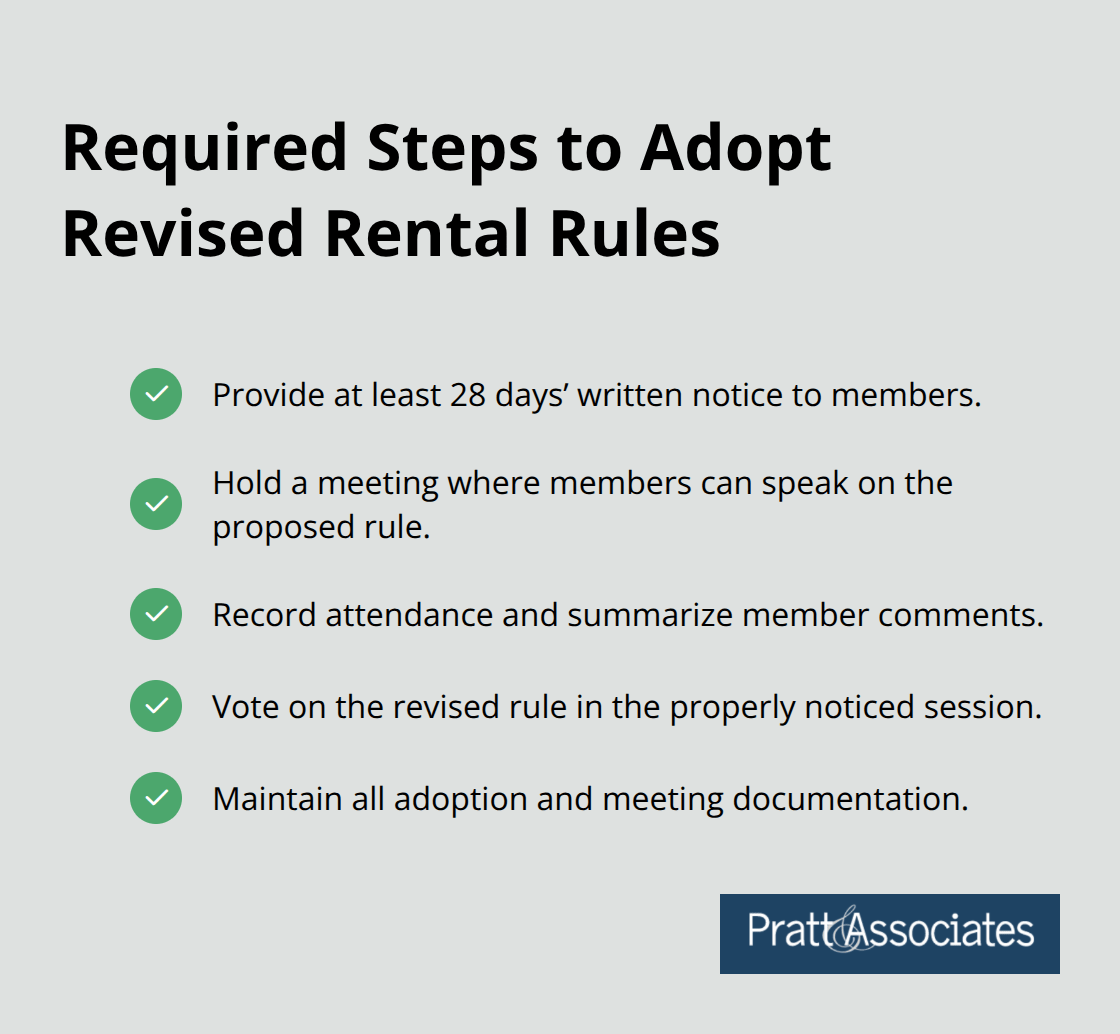
When you adopt the revised policy, follow the formal process exactly: provide 28 days’ written notice, hold a meeting where members can speak, record attendance and comments, vote on the revised rule, and maintain all documentation. This procedural rigor protects the rule from later challenges.
Implement Clear Enforcement Procedures and Documentation
Create an enforcement procedure that assigns one board member or manager responsibility for tracking every rental complaint. Document the date received, the property address, the rule violated, and the action taken. Photograph lease agreements when possible.
Keep a spreadsheet showing which violations received warnings, which received notices to cure, and which resulted in fines. This documentation prevents selective enforcement claims and demonstrates the board applies rules consistently. Without this record-keeping system, your enforcement efforts actually create evidence against the HOA if a member challenges the rule later. Consistent documentation transforms enforcement from a vulnerability into a strength.
Final Thoughts
Rental lease restrictions in Santa Clara County must meet three core standards to survive legal challenge: they must follow California Government Code Section 4340’s formal adoption process, align with your CC&Rs, and comply with current state tenant protection laws. Many boards discover their policies fail on one or more of these points only when a member contests them or litigation forces a review. The gap between outdated rules adopted years ago and California’s evolved legal landscape creates real vulnerability for your community.
Your board’s next step is straightforward. Pull your current rental lease restrictions and documentation, compare them against your CC&Rs and California Civil Code Section 1947.2, and identify any conflicts. Check whether you maintained proper notice records and member approval documentation when the rules were adopted, and if documentation is missing or conflicts exist, your policies need revision.
When you update your policies, follow the formal process precisely: provide 28 days’ written notice, hold a member meeting, record attendance and feedback, and maintain all records. Then implement consistent enforcement procedures with documented tracking of every violation and action taken. If your audit reveals significant conflicts or gaps in your documentation, or if you are uncertain whether your current rules comply with 2026 California law, Pratt & Associates can review your policies and guide your board through the revision process.